Posts tagged ‘cape hatteras’
Homework for Better Angling
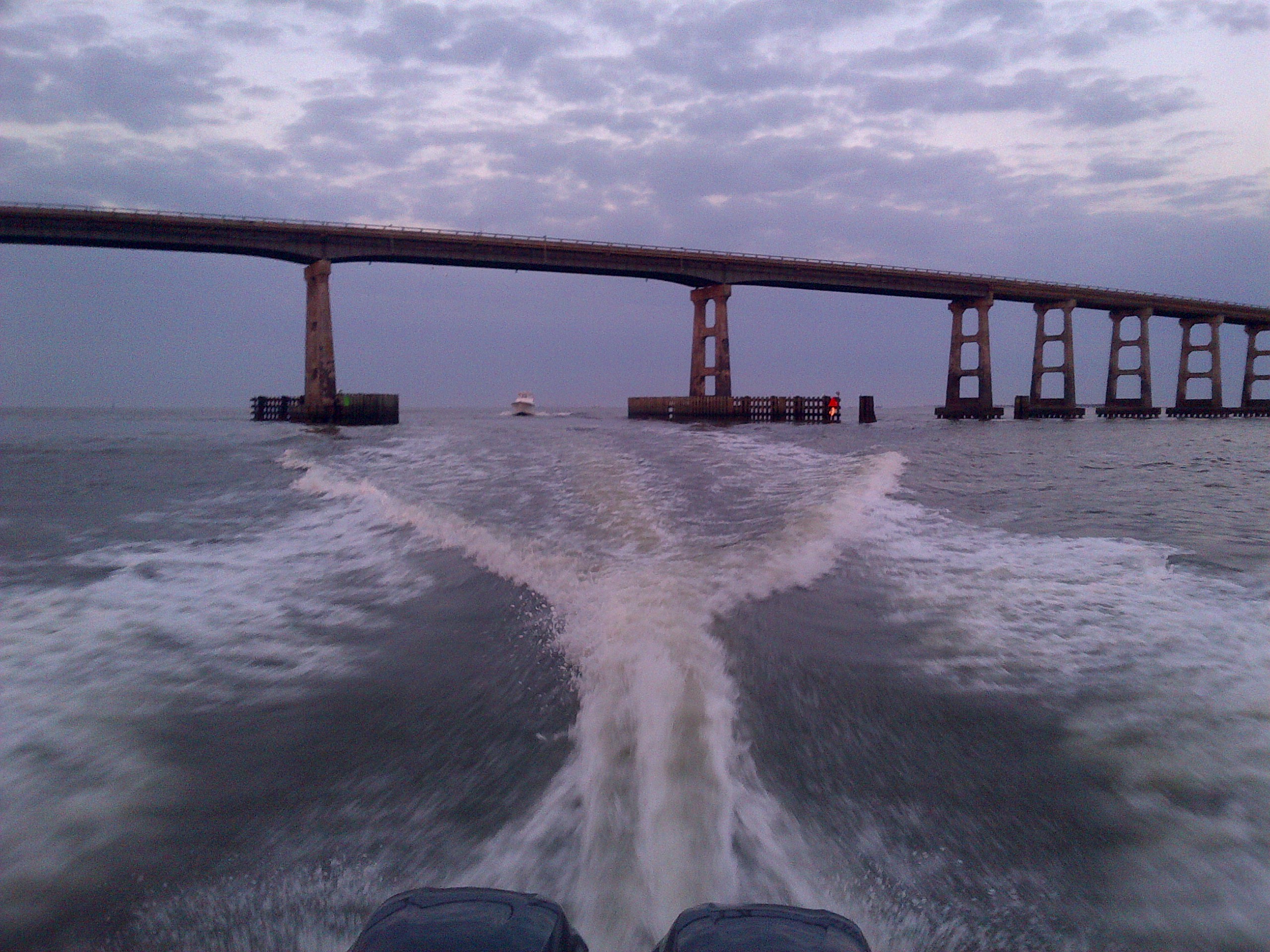
Wait a minute, “Captain Tony”, this is a fishing blog, not high school class. What are you doing talking about homework? Well, if you do a thorough job with your homework before heading out, this process will greatly improve your chances for angling success
My good friend, Capt. CA Richardson, once told me that you “catch more fish the night before”. The more you know about your prey and their preferences and weather and water conditions will be the differentiator between a successful fishing trip or just a nice boat ride.
What are some of the things that I check before heading out? First, I check if the target species is in season? What do the local fishing reports show? Is there news from the local piers, beaches, marinas or the various tackle shops? Where have the fish been seen and recently caught. What were the best baits being used. I now have a good idea that my target is at least in our area and is active.
Second, I look at weather conditions. I focus on the sun and cloud cover, air and water temperatures, tides, wave action and water clarity, winds (speed and direction), weather fronts (are they cold or warm, current locations – moving or stationary), barometer reading over the past several days and into my angling day, and finally what are the moon phases and the solunar status for the period.
The final piece to angling is having a little luck. But I always say, “You will change or make your own luck with good preparation”, or in the case of the purpose of this blog – “Do Your Homework for Better Angling”.
If you follow some of these simple tips, your success rate should improve. And hopefully over time, these will help you become a better angler.
Until next time,Tightlines. Capt. Tony
Our Own “Great White Shark”
Fishing has been slow since the beginning of the year. Water temperatures are in the upper 40’s and storms have been wreaking havoc on any attempt to get out and fish. The alternating weather conditions have confused both angler and prey.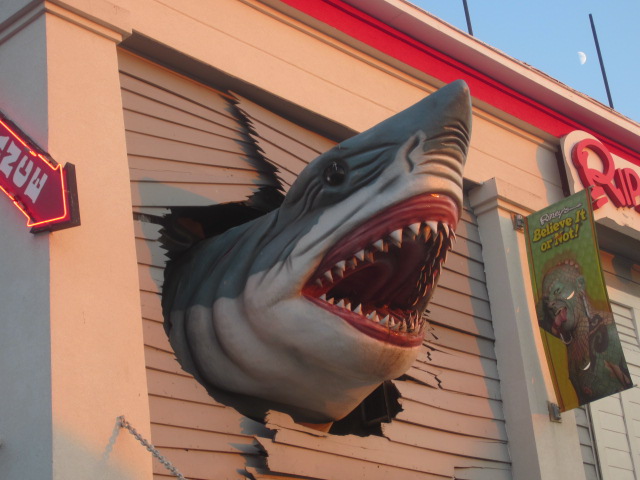
Some charters have been fishing, but since the inlet has significantly shoaled, it is only passible at certain times and those are treacherous at best. Sound fishing on the west wall of the Pamlico seems to be the ticket.
One interesting bit of news here on the Outer Banks is that we have had a sixteen foot great white shark visit our waters over the past week. Apparently, the large female has traveled great distances and has only recently settled in our waters. There is no word on why she is here or how long she will stay. Last report was that she was moving away but who knows.
Last September, Ocearch, a non-profit research group along with National Geographic has teamed up to study habits of great white sharks. They began their tracking of her when they attached a sensor to this huge shark in the waters off Cape Cod Massachusetts
Since then, the great white shark, now referred to by her given name “Mary Lee”, has traveled the entire east coast. Hopefully, she finds her way “outa here” by spring.
For more information on “Mary Lee” and her travels, I have included a link to our local paper. http://www.witn.com/countycloseups/outerbanks/headlines/Great-White-Shark-In-Pamlico-Sound—187779071.html
As long as “Mary Lee” is in our waters, my feet will be firmly planted on the shore.
Until next time, Tightlines
Capt. Tony
Been Schooled Lately?

Each year I make a date to attend several salt water fishing seminars. My work schedule and fishing budget limits me to only those that I feel can help hone my angling skills. As an avid angler for many years, I like many others believe, “I know it all”. Well this is just wishful thinking.
This year I began my “lesson plan” at the Virginia Beach Saltwater Sportsman’s National Seminar Series. It was six hours of jamb packed presentations that left even the seasoned anglers scratching their heads and saying, “I did not know that and I plan to use this on my next trip!”
The program included local in-shore and off-shore angling professionals as well as members of the SWS magazine staff tackle vendors, and many gear suppliers. The information was current and relevant to the local region. In addition, the package of literature, gifts and gear presented to each attendee are worth the price of admission.
If you want a great seminar to kick off your angling season, the SWS National Seminar Series is the place to be. Oh, and say hello to George, Harry, Mitch and of course Lou for me.
To access next one in Wilmington NC or any of the other 4 programs and their schedule, you should go to (800) 448-7360 or http://www.nationalseminarseries.com/
Until next time, Tightlines,
Capt. Tony
Don’t Forget to Wear that Jacket

If you lived in my house during my early years, you probably would have heard my mom yell many times, “its cold outside, if you don’t get that coat on you will die of pneumonia”. I wore that jacket then and learned lesson that has stayed with me ever since.
Well that same message is as applicable and important today as it was when my mother reminded me so many years ago.
In summer, we can easily forget to wear our life jacket while out on the water. And at that time, if you happen to find yourself in the water, you can simply climb out and dry off. But winter weather brings freezing water temperatures, it becomes another story. Survival depends on smart choices whether you are fishing or boating in summer or winter.
So regardless of how seasoned you are or how short your mission is, the use of your life jackets should be mandatory anytime you are on the water.
Recently, a local commercial fisherman was lost when he went out on the water one morning to check his gear without wearing his life jacket. Apparently he had it with him but failed to use it. Was this the cause of his demise or something else? Either way, if he had donned his life jacket, his chance of survival would have increased.
So regardless if you have someone reminds you or we just use basic common sense while on the water, a life jacket is always a good choice.
Until next time, Tightlines.
Capt. Tony
OBX – Still a Great Destination
Fishing has occasionally been real slow at best in December on the Outer Banks. Hurricane Sandy did minimal physical damage to homes and businesses here but we took a real beating with fishing and boating industries.
It seems our fishery was on track to be one of the most productive in years. I would catch just about every species on each trip out whether surf, bridge, pier or vessel. I used both artificial and cut bait to the same results – success!!
Then Sandy arrived. Water temperatures turned cold, winds picked up, and worst situation of all – the Oregon Inlet began to shoal over. The last report was that at high water we had a maximum of four feet in a channel that used to boast twice or three times that much. Charter and commercial boats have been limited while waiting for the dredge to open then inlet. Also, we lost several miles of roadway on Hatteras Island at Milo Beach S Curve. And the famous Avalon Pier suffered severe damage.
So what does an angler do in such situations? Well go fishing anyway. There are still dogfish to catch in the surf and I heard of several real nice stripers in the sound. Jennette’s Pier is open daily and the various bridges which are typically sparse of competition this time of year, are still a great place to spend several hours.
Our weather has been typical Outer Banks, so plan accordingly – bright skies, breeze and a little cool. But to me this is the second best time of the year. There are plenty of places to stay and eat. So what are you waiting on? Come on.
And for those fair weather anglers – don’t worry, when the winter temps and winds are behind us and the warm spring breezes have returned, fishing will pick up where we left off before “Sandy”.
Remember to use my various links taking you directly to Outer Banks happenings.
Until next time, Tightlines.
Capt. Tony
Un-Predicable Weather – Oh My!
Oh my!! Hurricanes, major flooding, winds, roads washed out, storm surges, and several of the most popular fishing areas on eastern Carolina are significantly damaged and closed for the season.
And now I hear that the Outer Banks can expect another powerful “nor ‘ester” heading to our area mid-week. Something we definitely do not need. Add all this to my crazy travel schedule at work and it equals zero fishing time.
I guess we should be thankful our little island wasn’t damaged worse. I send my thoughts and prayers to my family and friends up north who don’t even have power, phone or in some case they don’t even have a home to go to after “Sandy” visited. I received a report that power in some areas may not be back for more than a week.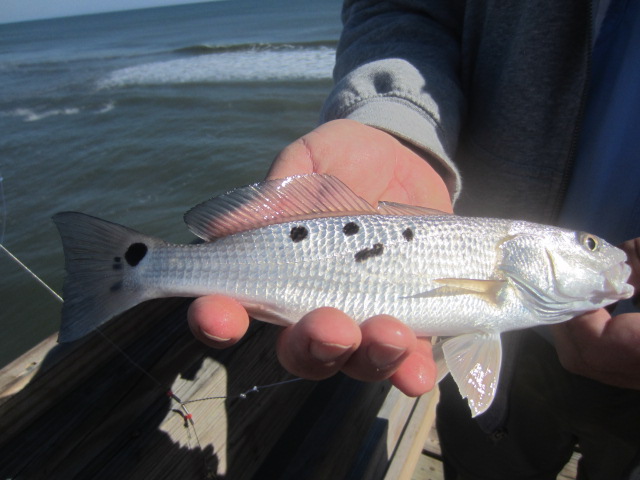
I see devastation in many of these areas. I am sure angling; boating or even finding a comfortable place sit down to read a paper or watch a football game. I am sure this is the last thing on their minds.
So let begin by saying things will get better. Normalcy will return with patience and determination.
My last angling outing before the storm hit was on the Kitty Hawk fishing pier. Puppy drum, trout, spot and blues were in abundance. Bait choices were all over the board. Fish were hitting anything in the water.
If you happen to be here, several piers are still open. Surf fishing is outstanding. Inshore and offshore boats are still operating.
Need a break from the anxiety from the past weeks weather, come visit, we are open. Just like my first mate and me, we came here for a short visit and stayed a decade.
Until next time – Tightlines, Capt. Tony
Coming to the Festival?
Are you going to be in the Outer Banks this weekend? I sure hope so. Well, if you are not here now or have other plans, you should try to change them. There is going to be a great function related to our local fishing community this weekend.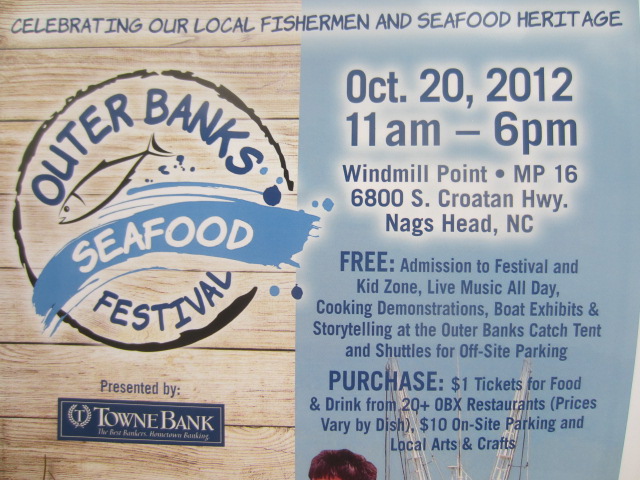
On Saturday, 20 October 2012, the Outer Banks will be holding it first annual Seafood Festival. The festival will be held at the old Windmill Point property in south Nags Head on the bypass. The festival will run from 1100 through 1800.
The festival will include cooking demonstrations, many exhibits, vendors, music and many other activities for both adults and children. The activities will focus on the Outer Banks commercial fishing industry. The show will host many of our local experts in the commercial fishing trades. I am looking forward to seeing some old friends and making new ones who have a long history of supporting our local commercial fishery and supplying seafood to not only us locally but worldwide.
The best thing is that the festival is “free” – including parking. That’s right – “FREE”.
There will be local food samplings and beverages will be for sale at the festival. You will need tickets to purchase of samples our seafood specialties that are featured at our many restaurants. These can be purchased on the day of the festival.
Weather is projected to be perfect. So there should be no excuse. It’s free, it’s local and will be a blast.
For more information, please see the festival web site.
http://www.outerbanksseafoodfestival.org
This will be a special event. Hope to see you there.
Until next time, Tightlines – Capt. Tony
Fall Fishing on the “Banks”
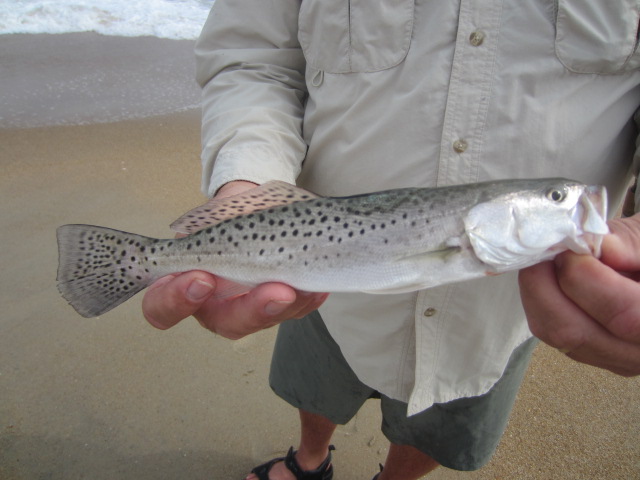 The fishing season has been an exciting one for me. I started in September in Southwest Florida. I hunted big gator trout and redfish with my friend Capt. CA in Tampa. And I caught trout and snook in the Charlotte Harbor area near Punta Gorda with my first mate.
Back home in North Carolina, I caught dozens of “specs” from both the bridges and surf. Seems the Trout fishery might just be the best it’s ever been in eastern Carolina.
I traveled up to Ocean City, Maryland for my annual off-shore charter out of Sunset Marina. This trip produced dozens of dolphin – “mahi-mahi” and a 35 pound yellow fin Tuna.
Work travel allowed me to give the rods and reels a chance to “cool off”.
October brought me more time on the water and it was almost like the light switch was never turned off. I caught puppy drum (southern anglers call them “redfish”), speckled trout, blues, black drum, and spot. It did not matter which bait I used. I caught specs on cut bait and spot on lead head with a twister tail. Just amazing for this area.
I am off for another short trip but plan to get back on the surf soon.
My best bet for success this week would be to use a standard bottom rig, #2 or #4 circle hooks, light pyramid sinker and cast into the wash from any pier or the surf. If you are fishing from a pier, try the north side in fall. It seems the old guys tell me that the north side in fall and south in spring and summer works best. Cast just past the white foam as the wave crest passes. You should find plenty of puppy drum and specs.
Remember the regulation – puppy drum 18-27 and speckled trout – 18 inches or larger.
I would also keep a light spinning set ready for those occasional runs of tailor blues or heavy trout during their migration south.
Until next time, Tightlines. Capt. Tony
Navigation – Old School Rules

We seem to be an extremely mobile society. We travel by air, land and sea with regular frequency. There is one common theme for all of these modes of travel. That commonality is aids of travel or in nautical terms, “Aids to Navigation.”
Amazingly, the “Aids to Navigation” Statute we follow now originated in our first US Congress and was signed into law on July 31, 1789. This act was referred to at the time as “Establishment and Support of Lighthouses, Beacons, and Buoys.”
Over 200 years later, we still use this original system. Although, members of our first Congress would probably not be able to recognize how the older version turned into the current rules.
Basically, “Aids to Navigation” can provide a boater with the same type of information drivers get from street signs, stop signals, road barriers, detours and traffic lights. These aids may be anything from lighthouses, to minor lights, day beacons, range lights, and sound signals, to lighted or unlighted buoys.
Each has a purpose and helps in determining location, getting from one place to another or staying out of danger. The goal of the U.S. Aids to navigation System is to promote safe navigation on the waterway.
I have found that most vessel operators would have a hard time navigating through the various signs, buoys and light schemes.
One way to become proficient with these aids would be to take a safety boating class through the Coast Guard Auxiliary or similar agency familiar with these rules.
Most states and local municipalities require some type of safe boating class. These classes can be completed easily over several weeks. And most classes are held in the evenings and weekends.
This is training is easy to complete and will make you a better boater. And might just help you avoid a “bad day on the water”.
Stay tuned, I will provide much more on Aids to Navigation in future blogs.
Until next time, Tightlines
Fishing in “Fishing Paradise”
The first mate and I traveled to the west coast of Florida in early September to fish for Gator trout and giant Redfish. Our guide was Capt. CA Richardson from Flats Class TV and Charters. The trip took us to Tampa Bay and Pinellas National Wildlife Refuge.
The weather was extremely hot with equal high humidity. The skies were clear with a constant breeze out of the southwest. We knew the conditions were going to be difficult but we were up for the challenge.
Our charter originated out of O’Neill’s Marina in St Petersburg, Florida. We have fished with Capt. CA before so we knew the drill. We would depart the dock at 0700 and fish both tides. Our trip would lead well into the afternoon. Our vessel was a popular Hells Bay Boats Works “Neptune”. We were ready.
The day started slow with us picking up an occasional speckled trout using both spoons and artificial lures. Our gear was top of the line Daiwa reels and Falcon light Gulf Spin rods. The reels were loaded with premium 15 pound braid. This set up has produced before, so we had confidence of a repeat success.
By 1000 we had caught a number of beautiful specs but not the “gator” size or giant reds that we hunted. We decided to try another area on the west side on the harbor.
During our travels to the next site, we spotted a school of giant reds. The pod was well over a dozen yards square. This school was the one we met up with last year estimated at several hundred fish. The forward wave push of this school was over six inches. Capt. CA maneuvered the vessel about 75 yards ahead of the school, turned the bow straight into them. And we waited.
As the school approached us, they suddenly disappeared. Gone – they nowhere to be found. Spooked!! We would search for them for over an hour. Without locating them again, we then proceeded to return to the Gator Trout fishery. Over the next several hours, we had a great day catching and releasing close to two dozen specs.
We returned to the dock at 1500, exhausted but satisfied that we had another great day on the water with our good friend Capt. CA.
For a memorable fishing experience, you need to plan a trip to southwest Florida. When in Florida, Capt CA is the guy.
One slogan that holds true for Florida – it is definitely a“fishing paradise”.
Until next time, Tightlines.
.
 NCsaltaire