Posts tagged ‘boating safety’
Preparation is the Key
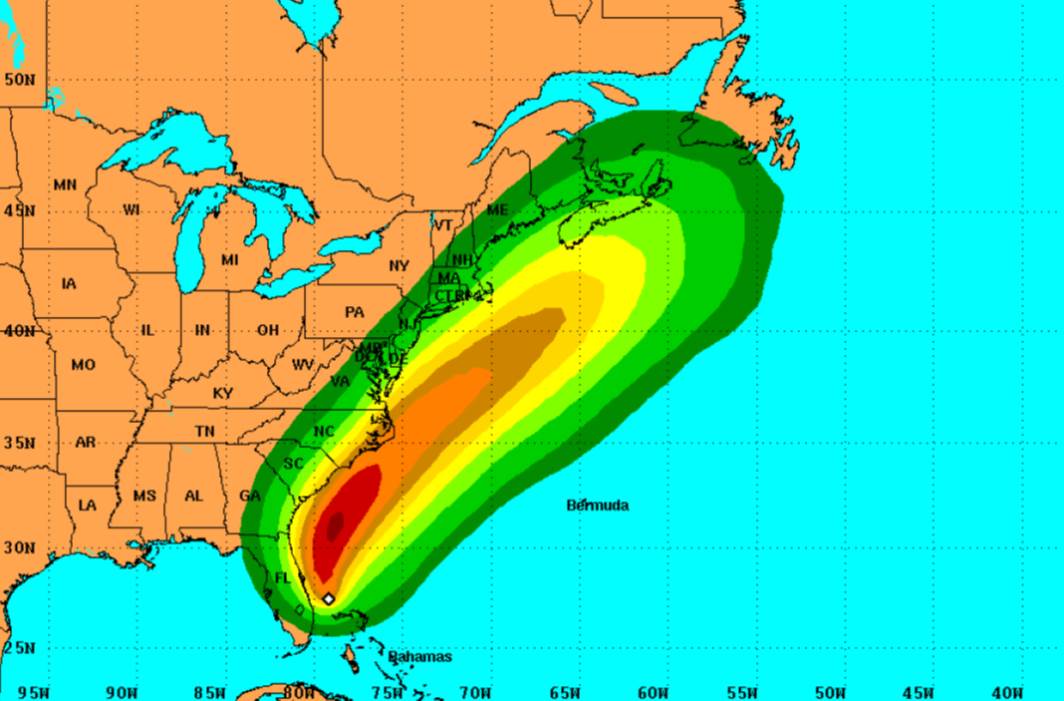 Hurricane season started a month ago and this week we are expecting the first storm of the year. Even though, TS Arthur does not appear to pose a significant threat to the Outer Banks, now is a good time for boat owners to develop a safety plan.
For boat owners, the first order of business is to monitor the weather forecasts. There are many resources out there but the best one is the National Hurricane Center. Storms typically should never surprise us. They typically form and approach very slowly, there is plenty of news out there and that usually gives us plenty of time to prepare.
Securing your vessel is the most important move. There are two ways to handle this – leave it in the water or pull it to a trailer or a cradle.
If you plan to leave in the water, you should either re-locate it to a safe harbor or moor it in place. Obviously, re-locating it is the safest way. But if you choose leave it in place, then you should make sure to secure it safely. A “must-do” is to research the potential storm surge for your area. The worst thing that you can do is to secure your vessel with dock lines that are too tight. Rising tides will destroy your moorings and pull your cleats right off your boat. Determine the amount of slack needed based on surge and secure them accordingly.
Ultimately, the best option is to remove your boat from the water altogether. I always try to place mine on a trailer. This allows me to either leave it on the driveway or pull it to safer ground. The trailer option is great but be sure to also tie the vessel to the trailer and chock the wheels so it will not move.
The cradle option is also are great way to secure your boat; just make sure the cradle is in a safe place and if possible out of the wind.
If you keep your vessel in a marina, talk to the dock master about his preparation plan. And work with him and other boats owners on the best way to prepare and protect your vessels.
Next, all curtains and any loose gear should be removed. Lower your antenna and radar equipment. Think about removing the hull plug. Typically, storms can produce a tremendous amount of rain. Sometimes up to 10-12 inches. Even though you bilge pump is working fine under normal conditions, the amount of rain may over whelm it.
I could go on more but if you do a little research you will find plenty of other resources available to guide you in developing a prevention plan. Do not let a tragedy be your teacher. Play it safe. Good common sense can play a huge part in preparing your vessel for the hurricane season.
Once you finally have everything secure, do a once over and think of your vessel as a big sail and remove any part that could possibly catch the wind or water. Think about what can go wrong and address it before the storm arrives. The best plan to remove the threat of damage before fighting “mother nature” at her worst.
Good luck with this year’s hurricane season. And with good preparation and planning, you will ride it out fine.
Until next time – Tightlines – Capt. Tony
Time is Running Out
Most of us think nothing of thirty days from now. But in a little more than that short period of time, National Oceanic and Atmospheric Administration (NOAA) will stop printing the giant paper nautical chart for good. For some mariners, this is a major change. 
The idea of charting waters on the US coasts dates back to Thomas Jefferson when he asked the federal government to survey of the local waters for mercantile transportation. This charting process with the support of many shipping firms and the federal government then evolved into NOAA printing these heavy nautical guides in 1862.
I am sure it’s been a long time coming but I never thought it would happen in my lifetime.
Many of the current boating enthusiasts grew up with electronic maps and on-demand maps printed by private vendors. But old “salts” like me used these charts exclusively. And even though these modern charts contain the same if not more information, seasoned mariners will always fall back to the heavy paper maps.
I believe the biggest losers will be the agencies that provide U.S Coast Guard approved courses. Their compass and plotting course will undoubtedly be affected by this change.
When I took my Master’s USCG Captain’s license course, we exclusively used these heavy paper charts to plotting a course and map and compass basics. The exercises were extremely valuable to me and my current time on the water. Even today, when I plan a trip, I pull out these maps.
All is not lost though, NOAA will continue to chart for underwater depths, miscellaneous structures, topographical markings and other hazards to mariners. Gone will be the combined maps and charts.
But after mid-April, NOAA will discontinue the printing of these historical charts. Most will end up in frames hanging from dock master’s office walls.
So if you want to update your chart box with NOAA maps – better hurry up because the deadline is coming fast.
Until next time – Tightlines – Capt. Tony
Boating in Cold Weather

The beginning of December is typically the turning point for fair weather boating in Eastern North Carolina. Temperatures fluctuate from cold to warm; cold rain turn to sleet and snow and the elements begin to take their toll on all parts of your vessel and trailers.
Most years, I typically winterize my vessels on the Thanksgiving weekend. I take it to the shop and they do the regular maintenance program which includes fuel line flushing and fluid changes. These winter checks can be expensive but well worth the cost. Especially, when in the spring you hear of the first bite happening in your region. Failing to plan ahead can leave you dry at the dock.
But this year I plan to do only an abbreviated winterization and hope there are several nice weekends to venture out.
There are several items to consider before you consider following my lead.
First, I maintained my vessel on a regular schedule throughout the year. When a small problem is found such as a weak battery, squeaky wheel or rough idle, I took it to the shop for the quick repair. I find it is less expensive to fix a minor issue when first discovered than to deal with a major one. And in my world, the major ones affect me when I least expect or need it.
The next precaution is to run a premium gas treatment in my gas tanks. I usually add the treatment well over the recommended amount per gallon. This will keep any stored gas fresh and moisture free. I also run the carbonators dry with this treated fuel. When I finish boating for the day, I disconnect the gas line and run the engine until it dies. This way the treated fuel ran through the system leaving the system dry.
Next, I disconnect the battery cables. If cold weather is predicted, then I bring the battery inside, otherwise, I leave it in the compartment. I check the charge frequently, because there is nothing worse than a dead battery either at the dock on afloat.
Finally, I cover the vessel with a loose fitting tarp. This keeps the moisture from rusting the metal parts, staining my decks but most importantly, keeps the vessel clean and ready to launch.
Obviously, I could add dozens of other precautions and maintenance tips but I will leave this up to you depending on your vessel and energy.
So if you are like me; winter fishing during nice weather breaks just might be the most successful and possibly productive.
Captain’s Tip – if you take care of your vessel and equipment, they will perform well for you when you need it most.
Until next time – Tightlines – Capt. Tony
Fouled Fuel – Summer Blues

It happens without notice. You have been boating all summer without any problems then boom. The engines start to sputter and spit. Not only does this prevent the higher RPM’s and speed; you can’t even keep the engine running at idle. Well welcome to the age of ethanol.
This summer was no different than most. I have been running the little Fantasea II each weekend I can without any problem. She starts right up with a little coaxing from the prime bulb on the 2 cycle Yamaha engine and away I go.
Then three weeks ago when I tried to go out, she coughed several times and died. I continued to prime the carbs and switch on the ignition. But to no avail. I believe the ethanol bandit got me again. I ran gas treatment full strength through the carbs – but no luck. So now it’s shop time and a busted budget.
So here is some advice on preventing this same thing from happening to you.
Today’s fuel contains up to 10% Ethanol. Ethanol is made with corn and water and when it mixes with petroleum, ““by magic” it produces gummy substance. And when this gummy substance filters into those small jet ports in the carb and sits there for a short time, well your carbs will sputter and spit and eventually stop. Hopefully, you are in port and moored when this happens.
Now there are three ways to fix this problem. Obviously, the more expensive way is the repair shop. This can cost several hundred dollars. And if this happens in the middle of boating season, your boat can be out of commission for at least several weeks and empty quite a bit out of your wallet.
The second way – and the best way – is to run a fuel additive in you tank every fill up. I use several together. I have found many types of additives on the market. I prefer to use Gas Shok and Sta-Bil combined. I probably could use one or the other but each together gives me piece of mind. I also will use Sea Foam when the boat will not be used for extended period. Not only does this control moisture, it helps increase your performance.
The final way is to try to use only “ethanol free” fuel. This type of fuel has limited availability. I have found several stations and marinas here on the Outer Banks that carry the ethanol free fuel. It is usually same price and other fuels and definitely gives you piece of mind.
Since I have been using this régime of using ethanol free fuel or stabilizer, my maintenance and down time have been minimal.
Prevention is always the best medicine. My recommendation is to use “ethanol free fuel and if you can’t find it, put at least one stabilizer in your boat fuel tanks with each fill up. If you find that you boat will be sitting and not being used for a while then I always add another measured amount. The stabilizer is a lot less expensive than the shop and it will keep you running smooth all year.
Until next time – Tightlines. Capt. Tony
Don’t Forget to Wear that Jacket

If you lived in my house during my early years, you probably would have heard my mom yell many times, “its cold outside, if you don’t get that coat on you will die of pneumonia”. I wore that jacket then and learned lesson that has stayed with me ever since.
Well that same message is as applicable and important today as it was when my mother reminded me so many years ago.
In summer, we can easily forget to wear our life jacket while out on the water. And at that time, if you happen to find yourself in the water, you can simply climb out and dry off. But winter weather brings freezing water temperatures, it becomes another story. Survival depends on smart choices whether you are fishing or boating in summer or winter.
So regardless of how seasoned you are or how short your mission is, the use of your life jackets should be mandatory anytime you are on the water.
Recently, a local commercial fisherman was lost when he went out on the water one morning to check his gear without wearing his life jacket. Apparently he had it with him but failed to use it. Was this the cause of his demise or something else? Either way, if he had donned his life jacket, his chance of survival would have increased.
So regardless if you have someone reminds you or we just use basic common sense while on the water, a life jacket is always a good choice.
Until next time, Tightlines.
Capt. Tony
Navigation – Old School Rules

We seem to be an extremely mobile society. We travel by air, land and sea with regular frequency. There is one common theme for all of these modes of travel. That commonality is aids of travel or in nautical terms, “Aids to Navigation.”
Amazingly, the “Aids to Navigation” Statute we follow now originated in our first US Congress and was signed into law on July 31, 1789. This act was referred to at the time as “Establishment and Support of Lighthouses, Beacons, and Buoys.”
Over 200 years later, we still use this original system. Although, members of our first Congress would probably not be able to recognize how the older version turned into the current rules.
Basically, “Aids to Navigation” can provide a boater with the same type of information drivers get from street signs, stop signals, road barriers, detours and traffic lights. These aids may be anything from lighthouses, to minor lights, day beacons, range lights, and sound signals, to lighted or unlighted buoys.
Each has a purpose and helps in determining location, getting from one place to another or staying out of danger. The goal of the U.S. Aids to navigation System is to promote safe navigation on the waterway.
I have found that most vessel operators would have a hard time navigating through the various signs, buoys and light schemes.
One way to become proficient with these aids would be to take a safety boating class through the Coast Guard Auxiliary or similar agency familiar with these rules.
Most states and local municipalities require some type of safe boating class. These classes can be completed easily over several weeks. And most classes are held in the evenings and weekends.
This is training is easy to complete and will make you a better boater. And might just help you avoid a “bad day on the water”.
Stay tuned, I will provide much more on Aids to Navigation in future blogs.
Until next time, Tightlines
Are We There Yet?
If you ever had to tow a boat, you probably have asked that question a hundred times. I know that I have.
My “Fantasea” mother ship needed a mid-season engine tune-up, so I pulled her out of the water and hooked it up for the trip to the shop.
The trip to the shop was easy because I picked a Sunday evening to travel. In a resort town, a Sunday is usually the quietest day of the week. It was a great trip down to the boat yard.
But the trip back was more eventful. My work schedules on most days do not permit me to get off early. But this past Wednesday I was able to make it work out.
Wednesday’s in a resort town just happened to be the busiest, only second to weekends. It seems that by Wednesday our visitors realize that their week is almost over and they need to fill those days with activities planned for a full week.
So here I am, traveling back from the shop, boat in tow, on the busiest vacation day of the week. Most vacationers are unfamiliar with my beach. And they typically ride in the middle of a four lane road, sightseeing or searching for the famous spot they read about long before their visit here.
And as most drivers do when they find that restaurant or gadget store – swerve to the right or left almost instantly so they don’t miss their turn.
Now here is where I say those famous words: “Are we there yet”. Drivers don’t realize that it takes a longer distance to stop a vehicle with a boat or trailer in tow, especially when we are traveling at a higher speed. And inevitably an out-of-towner will find that small space between two cars ahead, just when someone needs to turn or stop. Then bingo – I get a chance to test both the truck and trailer brakes.
Patience and courtesy for your fellow drivers run very thin at these points. But I am an extremely caucus driver and although my trip was very testy, the Fantasea made it home safe and sound.
So next time you see a boat in tow, remember to give them space.
Until next time, Tightlines
Can You Pass the Test?
May is a great month to launch your boat and enjoy the water.
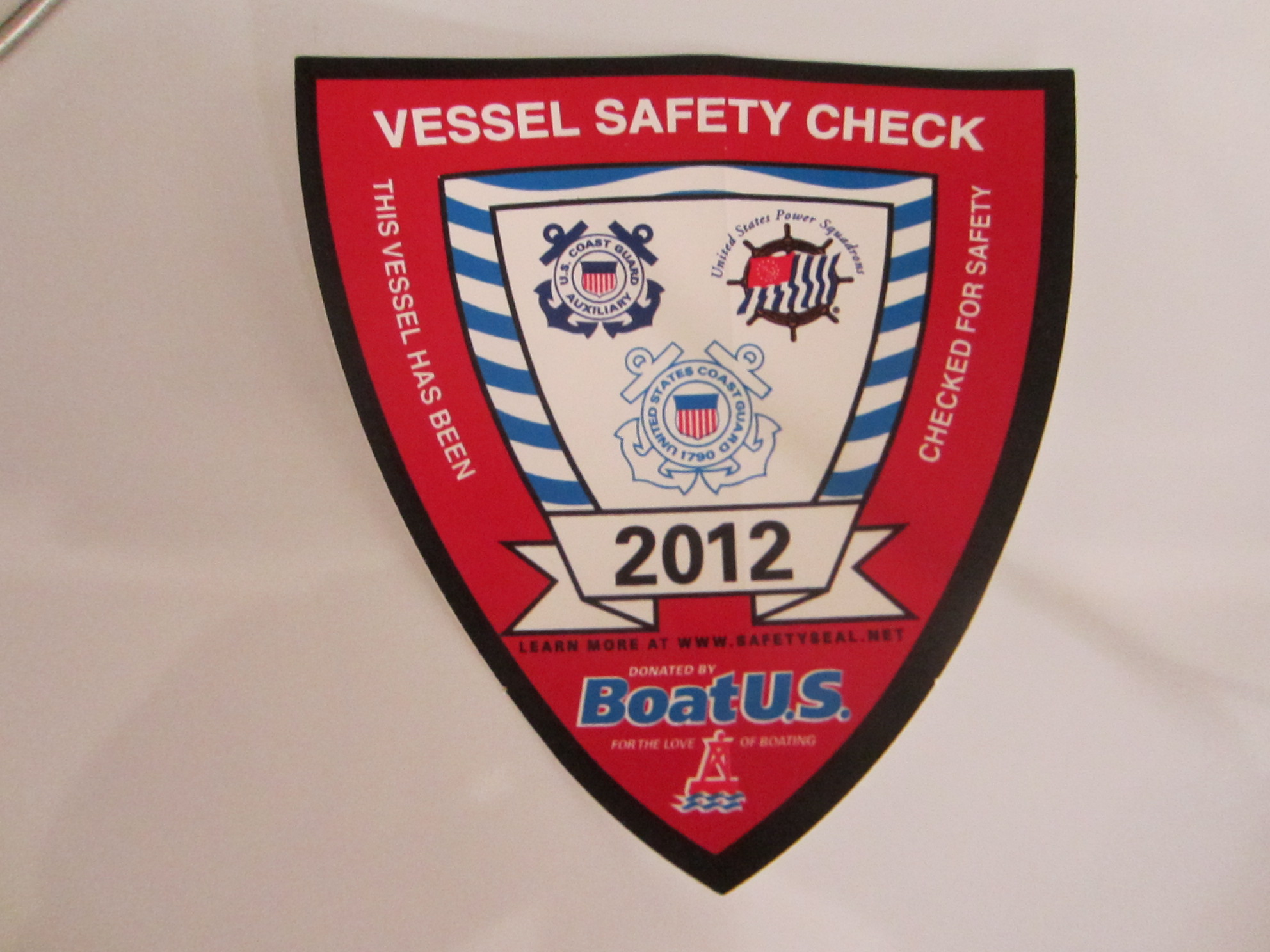
The first thing you should plan for is a “Vessel Safety Check”. This check is done by the local USGC Auxiliary and involves a courtesy examination of your boat (Vessel). It is designed to verify the presence and condition of certain safety equipment required by State and the Federal regulations.
The Vessel Examiner is a trained specialist and is a member of the United States Power Squadrons or the US Coast Guard Auxiliary. They will also make certain recommendations and discuss certain safety issues that will make you a safer boater.
This is not a boarding or a law enforcement issue. No citations will be given as a result of this encounter. Most times they will perform the inspection while your boat is still on the trailer.
The USCG Auxiliary inspector will also supply you with a copy of the evaluation so that you may follow some of the suggestions given. Great news: Vessels that pass will be able to display our distinctive VSC decal.
Please note: This does not exempt you from law enforcement boarding, but you can be prepared to make this a positive encounter.
So don’t forget: Safe Boating Week is May 22-28, 2012. Do your part by being a safe boater.
Tip of the Week: Before you set out on your first trip, take the time to get your boat inspected. This safety check will give you a head start for a safe boating season.
Until next time, Tightlines
Happy New Year – What an Amazing Year It Has Been

It’s been quite a year!
I have had the opportunity to do things that most anglers only dream of.
It started in southwest Florida where I fished the Charlotte Harbor for redfish, trout and snook. We added a side trip to the 10000 Islands in the Everglades. Besides the outstanding angling, the scenery was amazing. Pictures can never begin to share the experience.
I had an opportunity to travel to Alaska for business and took a side trip to a fish for Artic Grayling on the Chena River just outside of Fairbanks.
My annual off shore out of Ocean City, Md. produced not only bull dolphin and yellow fin tuna but a beautiful catch and release sailfish.
The first mate and I also took a fishing charter just south of St Petersburg, Florida on the Tampa Bay for giant redfish. We hooked up twelve giants and landed six. The first mate’s catch exceeded 32 inches and sixteen pounds. It was such a catch that Mirrolure is using her catch for advertising.
Between all of this, I spent countless hours on my home surf and sounds, catching trout, spot, croaker, blues, drum and of course flounder.
I met several famous television fishing show hosts during my various outings and had the opportunity for casting and fishing lessons from a professional fishing guide.
I want to thank everyone for visiting and supporting my blog over the past year. My goal has always been to provide you with the best angling and safe boating techniques. And have a lot of fun doing it. I especially enjoy sharing with you my many fishing experiences from my trips around the various waterways. My hope is that my blog will exceed your expectations and help make you a better angler and boater.
As we close 2011 and ease into 2012, my wish for you is to have a safe and healthy new year.
Until next time, Tightlines
One Last Look at “My Irene”

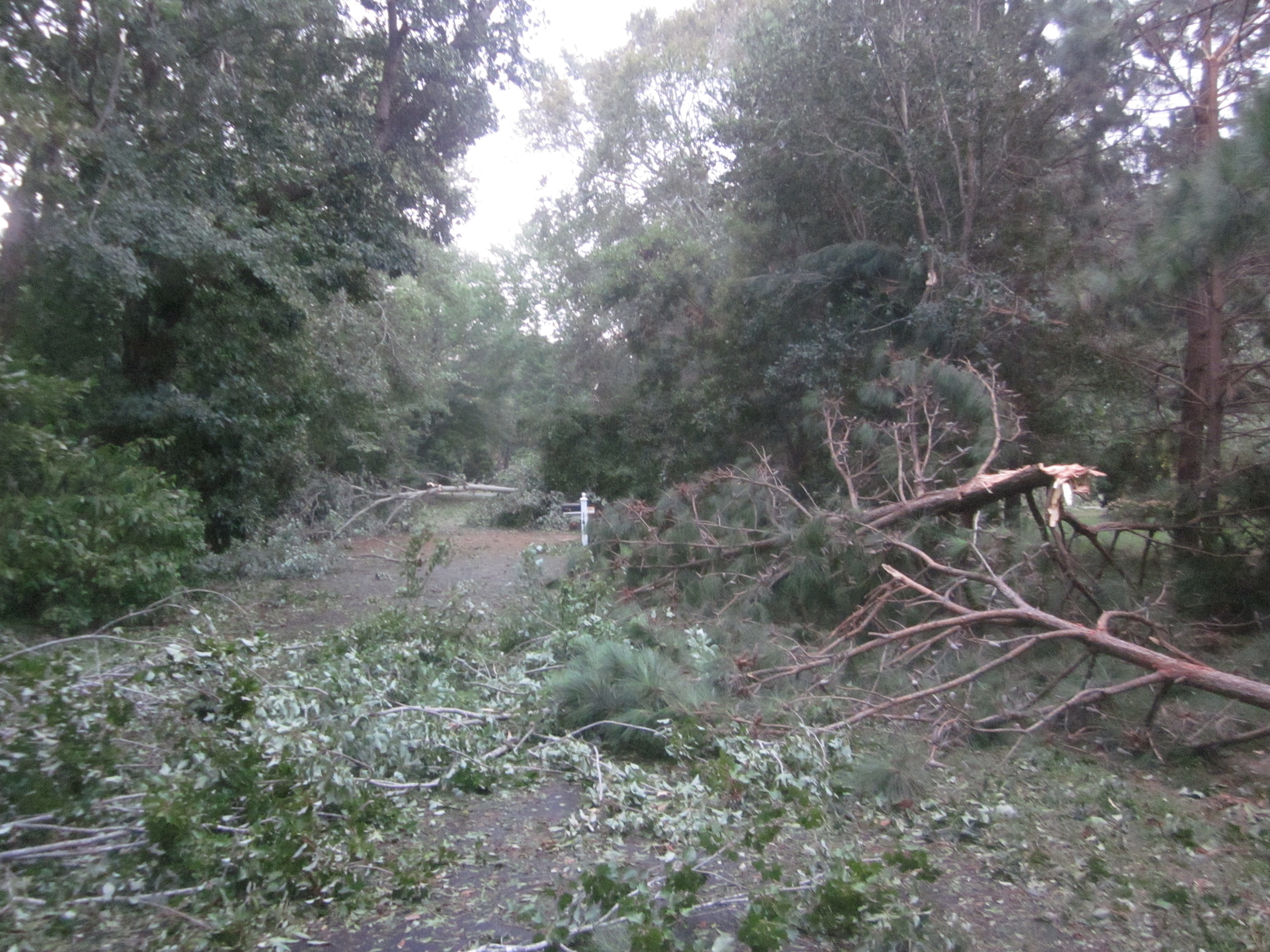
The Kitty Hawk area of North Carolina area got hit very hard. I am very lucky compared to many others. Several new inlets were cut on Hatteras Island, 25% of the new beach was lost in Nags Head, significant damage to sound side homes and property and many other horror stories both from friends and in the news. With all that was lost by others on the Outer Banks, I am very thankful.
One result of the storm was a neighbors pontoon boat broke its moorings and ended up in my yard. Not sure how we can move it. “No, I don’t need another boat.”
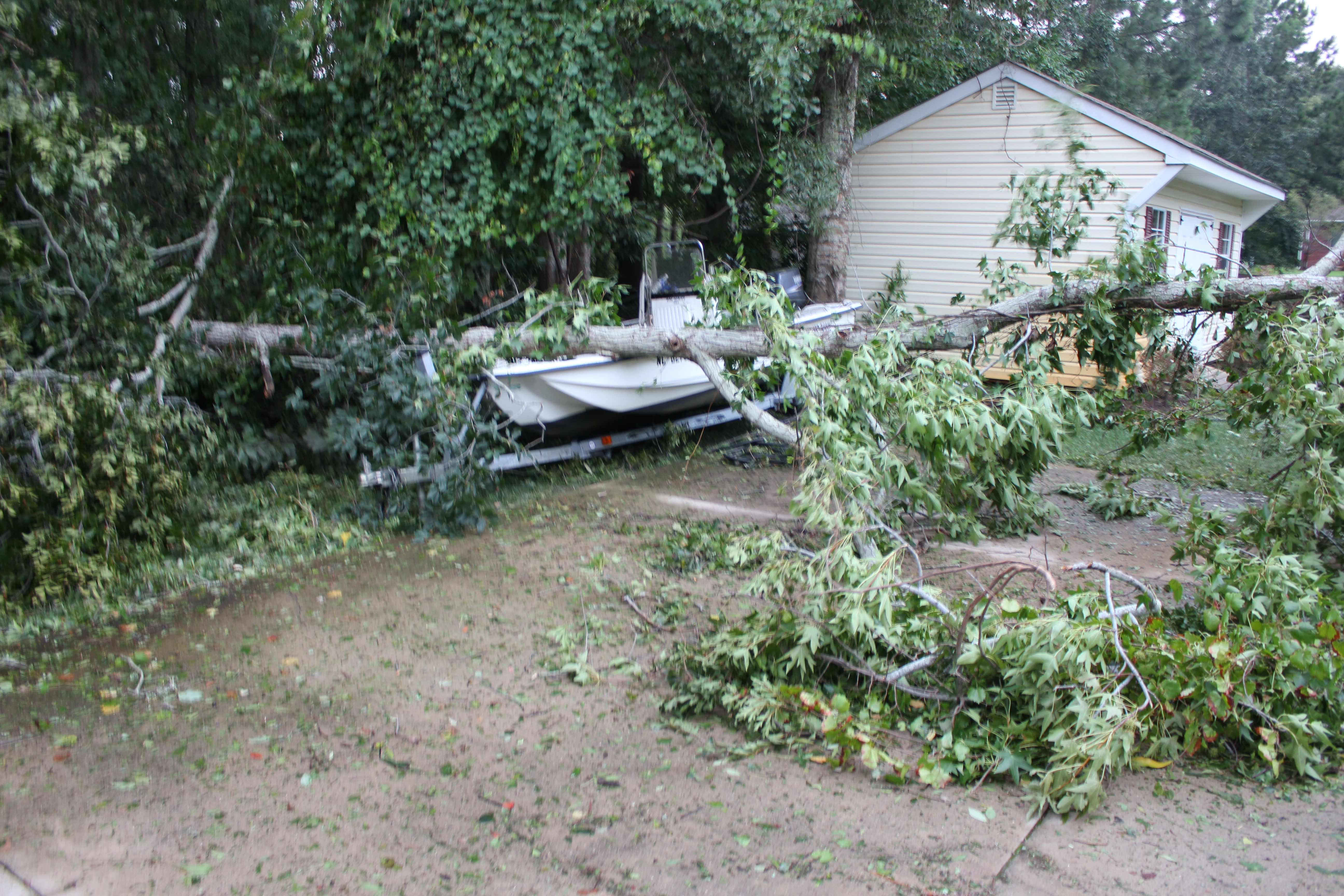
Also, a huge tree fell and landed on my flats boat in the driveway. There was minimal damage even though it appears worse. A BIG thanks to many helpful neighbors who assisted lifting this tree off the boat and moving the debris to the road.
And finally, several huge trees blocked our road. Again, a big thanks to the Town of Southern Shores for the quick cleanup.
Now it’s time to focus on the purpose of my blog – Fishing. As I write this blog, I am heading to Florida. I plan to fish several different areas in the southwest regions; Tampa Bay, Charlotte Harbor, Longboat Key and maybe a trip south to 10,000 Islands.
Hopefully, the fish cooperate.
Stay tuned for Forida fishing news.
Tightlines.
 NCsaltaire