Posts tagged ‘boating’
For All the Marbles
August and Fishing Tournaments in our region are synonymous. This time of year anglers from all over the east coast and beyond converge around the mid-Atlantic and the Outer Banks for the big money and bragging rights to who is the “top dog”. There are three notable tournaments in the mix right now.
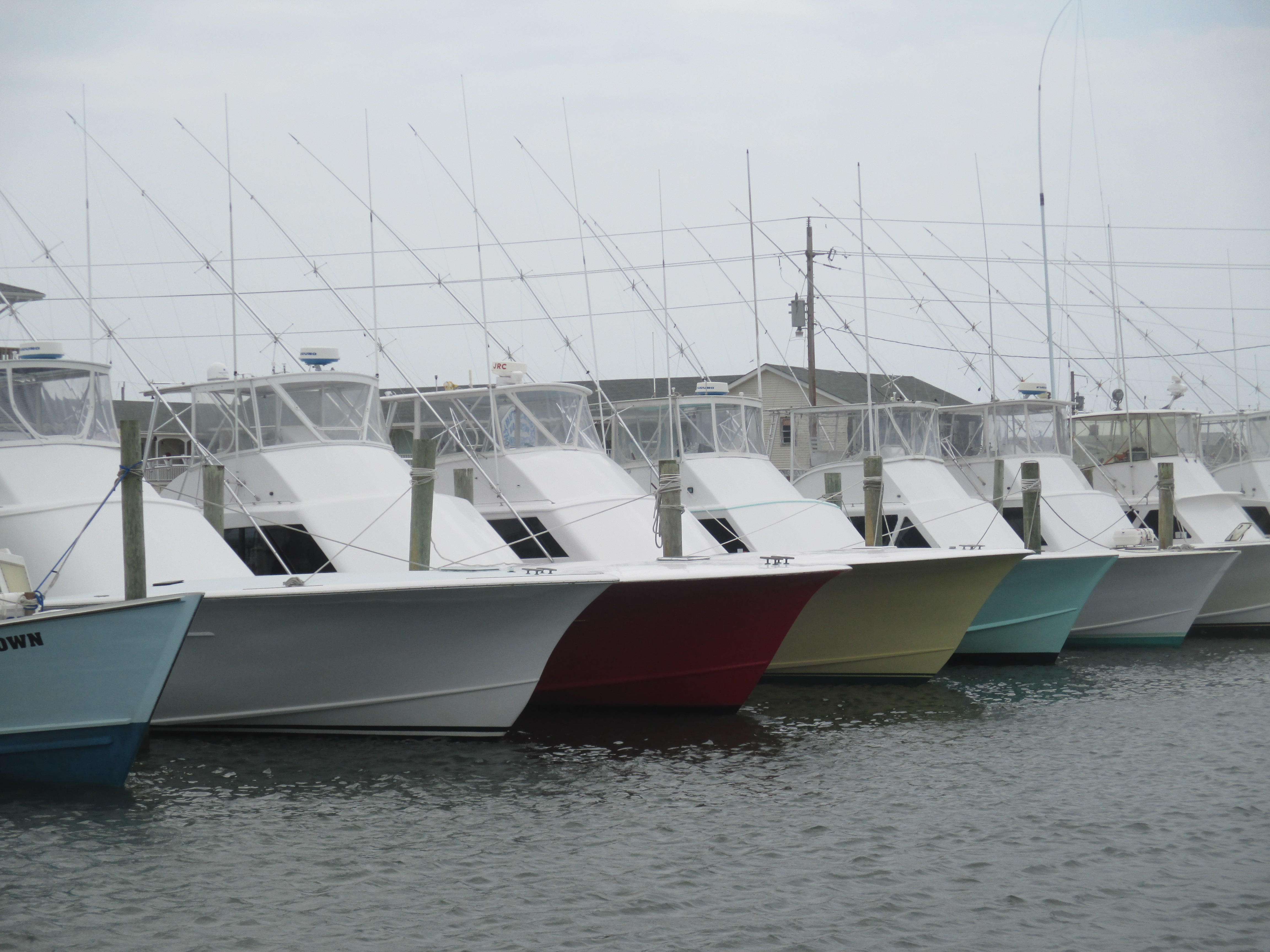 The first tournament is the 41st Ocean City Maryland White Marlin Open. This tournament is happening this week from 4-8 August 2014. The Outer Banks boasts twelve boats participating – eight from Pirates Cove and four from Oregon Inlet. And as of mid-week, there are several home town boys included on the leaderboard.
Hurricane Bertha did nothing to hinder their competitiveness in this monster of a tournament. Prize monies can get into the millions so these anglers are going for broke. So as they say in tournament language, “Game On”!!
This tournament can be followed on their web site at: Whitemarlinopen.com
The next two tournaments start this weekend in the Outer Banks.
The first one is the 25th Alice Kelly Memorial Ladies Only Billfish Tournament, Manteo North Carolina. It is happening Saturday, 9 August for registration and Caption’s meetings. Then one-day fishing and awards on 10 August. And sorry guys – it’s “ONLY LADIES”. This tournament is in memory of a special angler, Alice Kelly who succumbed to cancer at a very young age. It is the premier fund raising event and all proceeds go to the Outer Banks Cancer Support group. So if you are in the area, stop by Pirates Cove and support this very special function.
The next one is the 31st Pirates Cove Billfish Tournament. This tournament like the White Marlin Open is a world-class event held at the Pirates Cove Marina, Manteo, North Carolina. It supports many charities on the Outer Banks. Hundreds anglers from all over the east coast and beyond vie for purses that can exceed several hundred thousand dollars. And like the Alice Kelly, this is one not to be missed.
Both of these Pirates Cove Tournaments can be followed on pcbgt.com.
So if you are in the area, come and help these charities and the support the angling community for one or both of these world class events. There is nothing like seeing how the big “Boys and pretty Ladies” show off their stuff.
And then you would be able to say, I was there to see grown men and ladies fight for “All the Marbles”.
Until next time – Tightlines – Capt. Tony
Preparation is the Key
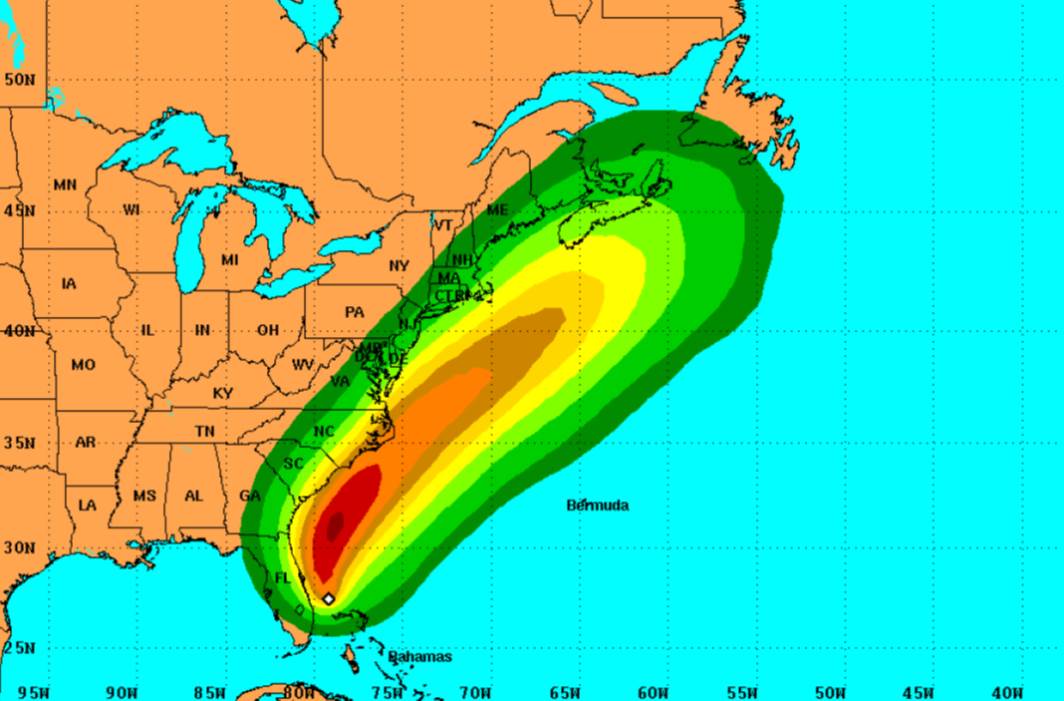 Hurricane season started a month ago and this week we are expecting the first storm of the year. Even though, TS Arthur does not appear to pose a significant threat to the Outer Banks, now is a good time for boat owners to develop a safety plan.
For boat owners, the first order of business is to monitor the weather forecasts. There are many resources out there but the best one is the National Hurricane Center. Storms typically should never surprise us. They typically form and approach very slowly, there is plenty of news out there and that usually gives us plenty of time to prepare.
Securing your vessel is the most important move. There are two ways to handle this – leave it in the water or pull it to a trailer or a cradle.
If you plan to leave in the water, you should either re-locate it to a safe harbor or moor it in place. Obviously, re-locating it is the safest way. But if you choose leave it in place, then you should make sure to secure it safely. A “must-do” is to research the potential storm surge for your area. The worst thing that you can do is to secure your vessel with dock lines that are too tight. Rising tides will destroy your moorings and pull your cleats right off your boat. Determine the amount of slack needed based on surge and secure them accordingly.
Ultimately, the best option is to remove your boat from the water altogether. I always try to place mine on a trailer. This allows me to either leave it on the driveway or pull it to safer ground. The trailer option is great but be sure to also tie the vessel to the trailer and chock the wheels so it will not move.
The cradle option is also are great way to secure your boat; just make sure the cradle is in a safe place and if possible out of the wind.
If you keep your vessel in a marina, talk to the dock master about his preparation plan. And work with him and other boats owners on the best way to prepare and protect your vessels.
Next, all curtains and any loose gear should be removed. Lower your antenna and radar equipment. Think about removing the hull plug. Typically, storms can produce a tremendous amount of rain. Sometimes up to 10-12 inches. Even though you bilge pump is working fine under normal conditions, the amount of rain may over whelm it.
I could go on more but if you do a little research you will find plenty of other resources available to guide you in developing a prevention plan. Do not let a tragedy be your teacher. Play it safe. Good common sense can play a huge part in preparing your vessel for the hurricane season.
Once you finally have everything secure, do a once over and think of your vessel as a big sail and remove any part that could possibly catch the wind or water. Think about what can go wrong and address it before the storm arrives. The best plan to remove the threat of damage before fighting “mother nature” at her worst.
Good luck with this year’s hurricane season. And with good preparation and planning, you will ride it out fine.
Until next time – Tightlines – Capt. Tony
Back in Time – Fishing the Albatross Fleet
 On Saturday 21 June, I had the opportunity to fish on the historic vessel Albatross II out of Hatteras Harbor Marina North Carolina. I fished that day with several friends from the Outer Banks Anglers Club.
Between spying the vessels from the dock that morning to the short chat I had with Captain Ernie Foster the night before lead me to believe that it was, in fact, going to be a memorable trip.
To sail into the Atlantic Gulf Stream with a captain and one of his vessels that actually created charter fishing on the Outer Banks 75 years ago was to say the least was just unbelievable.
On this day we arose early and assembled at the dock and climbed aboard the Albatross II at 0600 am. Within minutes, the mate had thrown the dock lines and Captain Ernie was turning the grand dame of a vessel toward the inlet.
Early on the cloudy skies and churning seas gave us insight that we would need to work for our prey that day. But the Captain was confident and vessel was ready and the anglers were up for the challenge.
With minutes of setting the lines in the Gulf Stream at 0730, we hooked up with our first dolphin. There would be several more early morning. We could now confidently say, “We would not be skunk”.
Over the course of the next several hours and despite of some heavy rain squalls and wind, hooked up with a beautiful white marlin (and yes she put on quite a dance show), we teased a big blue marlin in our spread without a hook up and landed several skipjacks.
But probably the most amazing sight of the day was when we witnessed close to hundred Mahi Mahi bust the surface right in front of us trying to escape a larger prey. We suspect that it may have been a one or many blue marlin chasing them into the air. Captain Ernie remarked that it wasn’t what we saw jumping that was amazing, but what we didn’t see lurking under the seas chasing those fish.
We finished the day with a school of baler dolphin. The small batch of fish were found just off the end of a long grass line. And after all the frenzy and determination, the school of balers were safely in the fish box.
Finally, while cruising home, I witnessed an amazing sight – about what the meaning of “respect your elders” really was.
As the Albatross II was on a steady course into the harbor, I saw many other charter vessels following at a safe distance. Each one could have just as easily pasted us by, but each one held steadfast behind her majesty – the grand dame. Just watching the grand old lady lead the fleet home and the fellow charter captains allow her “first billing” – well what a sight.
What better way for the fleet to respond but to respect and acknowledge the greatness of this captain and his fleet.
Until next time – Tightlines – Captain Tony
Something Old But Maybe New
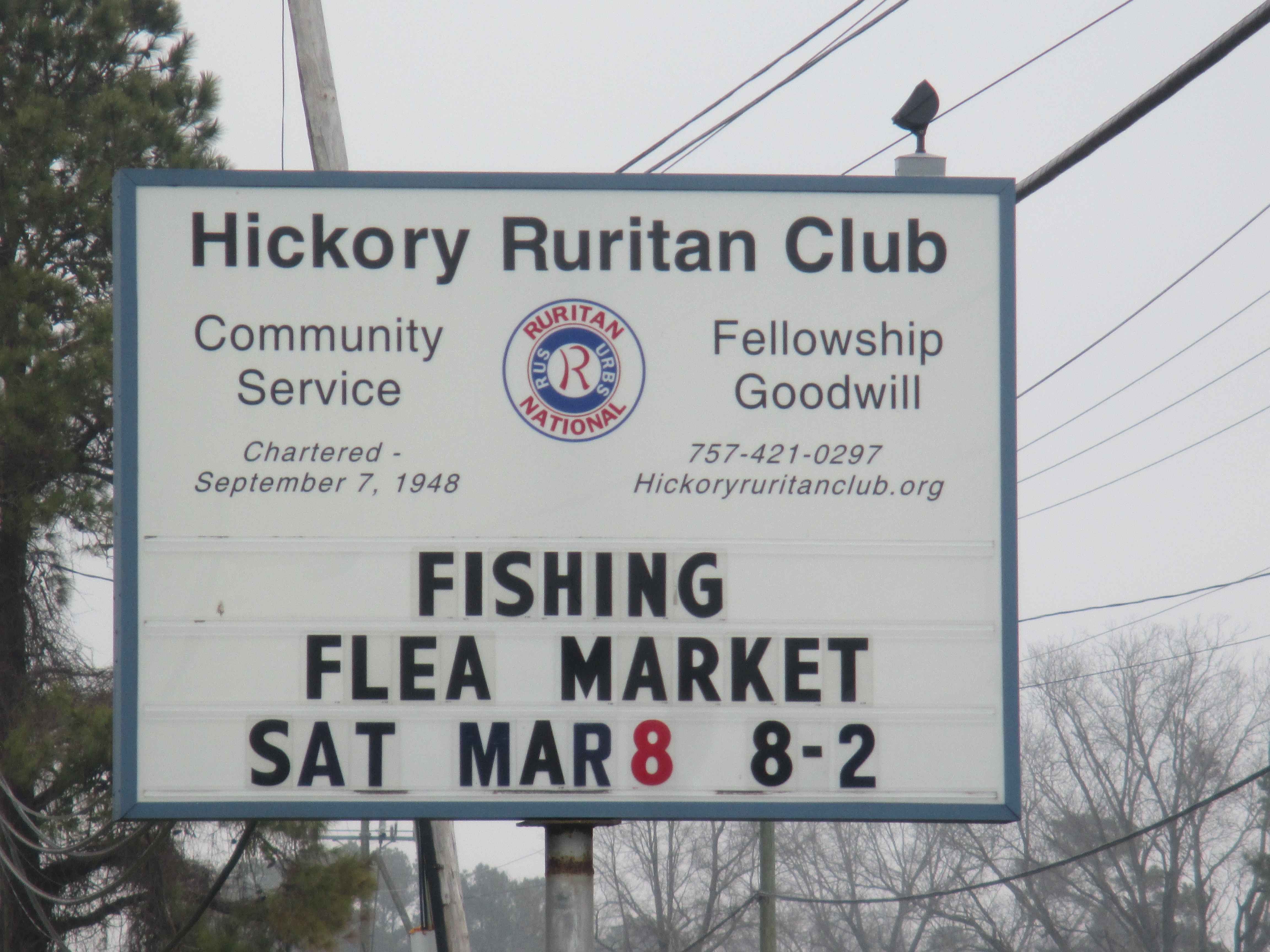
Each year the Great Bridge Fisherman’s Association holds their annual “Fishing Fleas Market” at the Hickory Ruritan Club on Old Battlefield Blvd in Chesapeake Virginia. And this year it is on Saturday, 8 March 2014.
This is the fourth year of the flea market and I believe it gets bigger and better each year.
If you are looking for that “something special” for that angler in your family then this is the place. There are tables and tents set up on three sides of the building and dozens of tables and vendors inside. You will find dozens of antique rods and reels, lures and boxes, and just about anything nautical. Most times the equipment and gear will be well used and just looking for a new home.
Get hungry during the flea – Food and beverages for sale will be available during your shopping spree.
As for me, each year I find a ‘keepsake treasure”. It is usually something I could live without but then maybe not.
Obviously, some of the equipment for sale is items old anglers are just determined to find a new home for. So if you are good at bargaining then you came the right place.
The flea market runs from 0800 – 1400 but the best deals will be had early and late.
The weather looks perfect for this year’s flea market so there should be no excuse for at least stopping by. Parking is free but there is a slight charge for entry. Door prizes are given out periodically.
So if you have some free time this Saturday – time will not be wasted.
Until next time – Tightlines – Capt. Tony
Time is Running Out
Most of us think nothing of thirty days from now. But in a little more than that short period of time, National Oceanic and Atmospheric Administration (NOAA) will stop printing the giant paper nautical chart for good. For some mariners, this is a major change. 
The idea of charting waters on the US coasts dates back to Thomas Jefferson when he asked the federal government to survey of the local waters for mercantile transportation. This charting process with the support of many shipping firms and the federal government then evolved into NOAA printing these heavy nautical guides in 1862.
I am sure it’s been a long time coming but I never thought it would happen in my lifetime.
Many of the current boating enthusiasts grew up with electronic maps and on-demand maps printed by private vendors. But old “salts” like me used these charts exclusively. And even though these modern charts contain the same if not more information, seasoned mariners will always fall back to the heavy paper maps.
I believe the biggest losers will be the agencies that provide U.S Coast Guard approved courses. Their compass and plotting course will undoubtedly be affected by this change.
When I took my Master’s USCG Captain’s license course, we exclusively used these heavy paper charts to plotting a course and map and compass basics. The exercises were extremely valuable to me and my current time on the water. Even today, when I plan a trip, I pull out these maps.
All is not lost though, NOAA will continue to chart for underwater depths, miscellaneous structures, topographical markings and other hazards to mariners. Gone will be the combined maps and charts.
But after mid-April, NOAA will discontinue the printing of these historical charts. Most will end up in frames hanging from dock master’s office walls.
So if you want to update your chart box with NOAA maps – better hurry up because the deadline is coming fast.
Until next time – Tightlines – Capt. Tony
Show Time Season Again
 It’s Show Time Season again.
The Outer Banks winter has had more precipitation than I am used to or want. The snow fall levels have exceeded many past winters. The weather continues to fluctuate from warm to cold – only consistency is “that’s why they call it winter time”. But to me, it’s like a work week – you need a “Monday” each week to look forward to that “Friday”’. Winter is my Monday.
All is not lost on this brief interruption from our angling adventures. It’s the Boat Show Season.
Most angling and boating enthusiasts only go to these shows to dream – but what better place to dream about owning a vessel that your friends will envy.
And then there are the shoppers – but you typically don’t see them – you see the “sold” signs on the nice vessels.
Although, I did not replace any of my vessels this year, I found many that would meet me needs.
So if you are looking for something to do between the couch ball seasons then a boat show is what you need.
There are plenty left to attend this year especially my favorite – Miami Boat Show.
So if you are bored and ready for something new – a boat show is for you.
Until next time – Tight-lines – Capt. Tony
Boating in Cold Weather

The beginning of December is typically the turning point for fair weather boating in Eastern North Carolina. Temperatures fluctuate from cold to warm; cold rain turn to sleet and snow and the elements begin to take their toll on all parts of your vessel and trailers.
Most years, I typically winterize my vessels on the Thanksgiving weekend. I take it to the shop and they do the regular maintenance program which includes fuel line flushing and fluid changes. These winter checks can be expensive but well worth the cost. Especially, when in the spring you hear of the first bite happening in your region. Failing to plan ahead can leave you dry at the dock.
But this year I plan to do only an abbreviated winterization and hope there are several nice weekends to venture out.
There are several items to consider before you consider following my lead.
First, I maintained my vessel on a regular schedule throughout the year. When a small problem is found such as a weak battery, squeaky wheel or rough idle, I took it to the shop for the quick repair. I find it is less expensive to fix a minor issue when first discovered than to deal with a major one. And in my world, the major ones affect me when I least expect or need it.
The next precaution is to run a premium gas treatment in my gas tanks. I usually add the treatment well over the recommended amount per gallon. This will keep any stored gas fresh and moisture free. I also run the carbonators dry with this treated fuel. When I finish boating for the day, I disconnect the gas line and run the engine until it dies. This way the treated fuel ran through the system leaving the system dry.
Next, I disconnect the battery cables. If cold weather is predicted, then I bring the battery inside, otherwise, I leave it in the compartment. I check the charge frequently, because there is nothing worse than a dead battery either at the dock on afloat.
Finally, I cover the vessel with a loose fitting tarp. This keeps the moisture from rusting the metal parts, staining my decks but most importantly, keeps the vessel clean and ready to launch.
Obviously, I could add dozens of other precautions and maintenance tips but I will leave this up to you depending on your vessel and energy.
So if you are like me; winter fishing during nice weather breaks just might be the most successful and possibly productive.
Captain’s Tip – if you take care of your vessel and equipment, they will perform well for you when you need it most.
Until next time – Tightlines – Capt. Tony
Try Looking for Something New
Most anglers have that sweet spot where they are confident for success. They have found that this location historically has been very productive over time. And that feeling gives the angler the satisfaction that fish will be caught. Or at least if no fish are landed, you know it is only a matter of a minor modification to change your luck.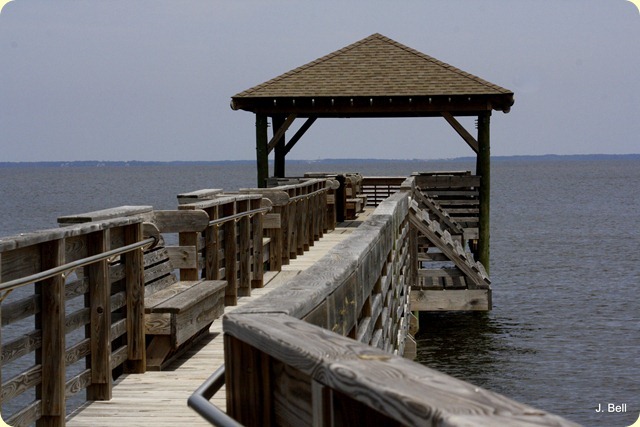
I have a number of sweet spots on the Outer Banks that I use on a regular basis. With these spots, I know the best time of day to fish – the tides that produces the most fish – the snags that hold many of my rigs – just about everything important about this favorite spot. These facts give me that level of accomplishment on each outing help me catch some trophies but also contribute to some disappointments. But as a rule, I return to this place as often as possible because I am comfortable there. I know we all have those spots.
OK – so now let’s get uncomfortable. Let’s see if we can change our scenery.
Today, I explored the Mann’s Harbor Pier – better known as BeBop’s Multi-Purpose Pier – Hwy 64/264. The Mann’s Harbor Pier is located at the west end of the William B. Umstead bridge (old bridge). Fishing, crabbing, purple martin viewing as well as great photography makes this a “must visit” location.
The pier is handicapped friendly with several benches as well as a sun-shaded awning about mid-pier. The pier was constructed to accommodate both recreation and relaxation. It also faces northeast so it gives you access to the rapid current that flows from the Albemarle into the Croatian sound. This fast current makes it a perfect ambush spot for aggressive feeders.
During my visit to this new find, I caught a Bluefish and Puppy Drum on a jig head and spot and croaker on a standard bottom rig. Although, all were throw-backs, I enjoyed the time.
So if you are ready to try something new – jumping out of your comfort zone, then the Mann’s Harbor – BeBop Multi-Purpose Pier is for you.
Capt.’s Tip: Bring your bug spray. This area is adjacent to wetlands – so don’t let bugs ruin your day.
Until next time,Tightlines – Capt. Tony
Fouled Fuel – Summer Blues

It happens without notice. You have been boating all summer without any problems then boom. The engines start to sputter and spit. Not only does this prevent the higher RPM’s and speed; you can’t even keep the engine running at idle. Well welcome to the age of ethanol.
This summer was no different than most. I have been running the little Fantasea II each weekend I can without any problem. She starts right up with a little coaxing from the prime bulb on the 2 cycle Yamaha engine and away I go.
Then three weeks ago when I tried to go out, she coughed several times and died. I continued to prime the carbs and switch on the ignition. But to no avail. I believe the ethanol bandit got me again. I ran gas treatment full strength through the carbs – but no luck. So now it’s shop time and a busted budget.
So here is some advice on preventing this same thing from happening to you.
Today’s fuel contains up to 10% Ethanol. Ethanol is made with corn and water and when it mixes with petroleum, ““by magic” it produces gummy substance. And when this gummy substance filters into those small jet ports in the carb and sits there for a short time, well your carbs will sputter and spit and eventually stop. Hopefully, you are in port and moored when this happens.
Now there are three ways to fix this problem. Obviously, the more expensive way is the repair shop. This can cost several hundred dollars. And if this happens in the middle of boating season, your boat can be out of commission for at least several weeks and empty quite a bit out of your wallet.
The second way – and the best way – is to run a fuel additive in you tank every fill up. I use several together. I have found many types of additives on the market. I prefer to use Gas Shok and Sta-Bil combined. I probably could use one or the other but each together gives me piece of mind. I also will use Sea Foam when the boat will not be used for extended period. Not only does this control moisture, it helps increase your performance.
The final way is to try to use only “ethanol free” fuel. This type of fuel has limited availability. I have found several stations and marinas here on the Outer Banks that carry the ethanol free fuel. It is usually same price and other fuels and definitely gives you piece of mind.
Since I have been using this régime of using ethanol free fuel or stabilizer, my maintenance and down time have been minimal.
Prevention is always the best medicine. My recommendation is to use “ethanol free fuel and if you can’t find it, put at least one stabilizer in your boat fuel tanks with each fill up. If you find that you boat will be sitting and not being used for a while then I always add another measured amount. The stabilizer is a lot less expensive than the shop and it will keep you running smooth all year.
Until next time – Tightlines. Capt. Tony
Homework for Better Angling
Wait a minute, “Captain Tony”, this is a fishing blog, not high school class. What are you doing talking about homework? Well, if you do a thorough job with your homework before heading out, this process will greatly improve your chances for angling success
My good friend, Capt. CA Richardson, once told me that you “catch more fish the night before”. The more you know about your prey and their preferences and weather and water conditions will be the differentiator between a successful fishing trip or just a nice boat ride.
What are some of the things that I check before heading out? First, I check if the target species is in season? What do the local fishing reports show? Is there news from the local piers, beaches, marinas or the various tackle shops? Where have the fish been seen and recently caught. What were the best baits being used. I now have a good idea that my target is at least in our area and is active.
Second, I look at weather conditions. I focus on the sun and cloud cover, air and water temperatures, tides, wave action and water clarity, winds (speed and direction), weather fronts (are they cold or warm, current locations – moving or stationary), barometer reading over the past several days and into my angling day, and finally what are the moon phases and the solunar status for the period.
The final piece to angling is having a little luck. But I always say, “You will change or make your own luck with good preparation”, or in the case of the purpose of this blog – “Do Your Homework for Better Angling”.
If you follow some of these simple tips, your success rate should improve. And hopefully over time, these will help you become a better angler.
Until next time,Tightlines. Capt. Tony
 NCsaltaire