Posts tagged ‘beach weather’
The Usual Summer Faire
 Fishing on the Outer Banks in August moves our fishery from aggressive to slightly passive. The hot weather begins to warm our waters and the fishing slows down a bit. The surf and pier water temperatures can range between mid-seventies to lower eighties.
Sound temperatures can be even warmer. Our local species will seek cooler depths and when subjected to these changes and it causes them to become less likely to feed during those warmer parts of the day.
This temperature change causes most of large fish into deeper water and brings in the smaller ones who are now less fearful of predators. Although this is generally true, larger fish sometimes break that rule, so anything goes during this latter part of our summer.
In summer, I like to fish either early in the morning or early evening. The cooler air temperatures help cool the water and increases that bite.
Look for the outgoing tide during these times. If fishing on the surf, fish close in. Most of our summer species are feeding on the small sand fleas right in the wash. The slough, a shallow trough between the beach and sand bar is an excellent spot to find fish.
The best bet in August for our first time or regular angler is to grab a light to medium rod with a standard two hook bottom rig, bait it with a small piece of squid, shrimp or blood worm and hit the beach.
If you want a little more variety, the other option is to visit one of our many piers or bridges. Same fishing process applies – fish early and late and focuses on the bottom species. When fishing on the piers, I first watch others – what are they catching and how then mimic their style.
So grab a rod and head out. You will have a great time exploring our summer fishery.
And as always, know the rules, purchase a license and return any un-wanted fish back into the water carefully. For more information on fishing our beaches and piers, see several of my previous blog posts.
Until next time, Tightlines – Capt. Tony
Preparation is the Key
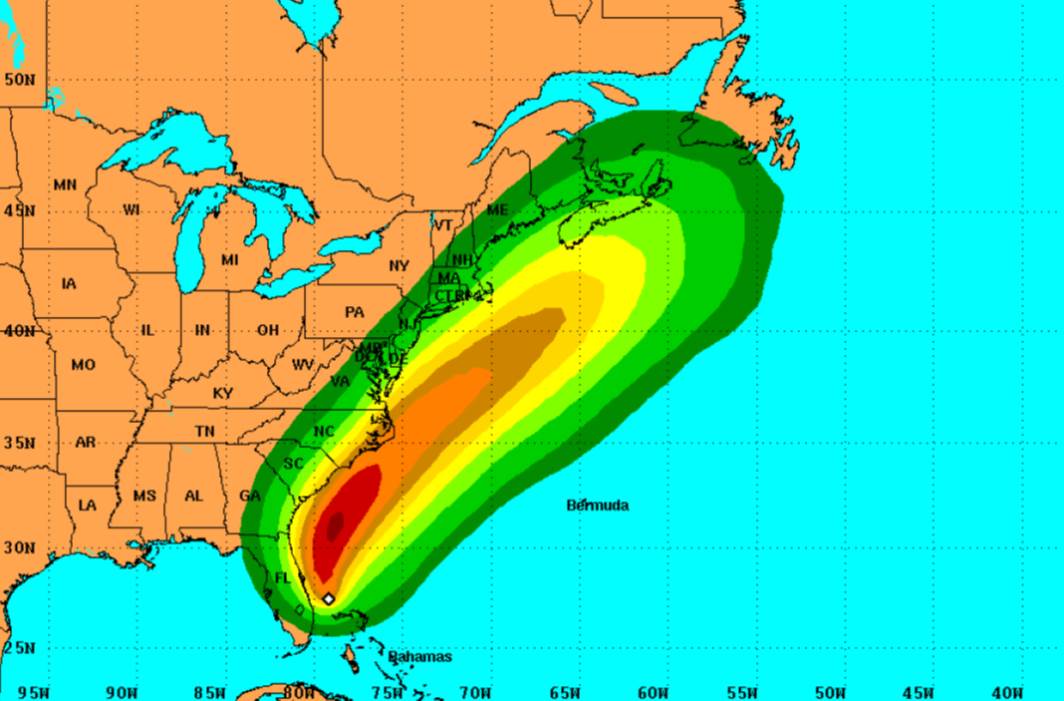 Hurricane season started a month ago and this week we are expecting the first storm of the year. Even though, TS Arthur does not appear to pose a significant threat to the Outer Banks, now is a good time for boat owners to develop a safety plan.
For boat owners, the first order of business is to monitor the weather forecasts. There are many resources out there but the best one is the National Hurricane Center. Storms typically should never surprise us. They typically form and approach very slowly, there is plenty of news out there and that usually gives us plenty of time to prepare.
Securing your vessel is the most important move. There are two ways to handle this – leave it in the water or pull it to a trailer or a cradle.
If you plan to leave in the water, you should either re-locate it to a safe harbor or moor it in place. Obviously, re-locating it is the safest way. But if you choose leave it in place, then you should make sure to secure it safely. A “must-do” is to research the potential storm surge for your area. The worst thing that you can do is to secure your vessel with dock lines that are too tight. Rising tides will destroy your moorings and pull your cleats right off your boat. Determine the amount of slack needed based on surge and secure them accordingly.
Ultimately, the best option is to remove your boat from the water altogether. I always try to place mine on a trailer. This allows me to either leave it on the driveway or pull it to safer ground. The trailer option is great but be sure to also tie the vessel to the trailer and chock the wheels so it will not move.
The cradle option is also are great way to secure your boat; just make sure the cradle is in a safe place and if possible out of the wind.
If you keep your vessel in a marina, talk to the dock master about his preparation plan. And work with him and other boats owners on the best way to prepare and protect your vessels.
Next, all curtains and any loose gear should be removed. Lower your antenna and radar equipment. Think about removing the hull plug. Typically, storms can produce a tremendous amount of rain. Sometimes up to 10-12 inches. Even though you bilge pump is working fine under normal conditions, the amount of rain may over whelm it.
I could go on more but if you do a little research you will find plenty of other resources available to guide you in developing a prevention plan. Do not let a tragedy be your teacher. Play it safe. Good common sense can play a huge part in preparing your vessel for the hurricane season.
Once you finally have everything secure, do a once over and think of your vessel as a big sail and remove any part that could possibly catch the wind or water. Think about what can go wrong and address it before the storm arrives. The best plan to remove the threat of damage before fighting “mother nature” at her worst.
Good luck with this year’s hurricane season. And with good preparation and planning, you will ride it out fine.
Until next time – Tightlines – Capt. Tony
SPOTTED SEATROUT RECREATIONAL – SEASON RE-OPENS
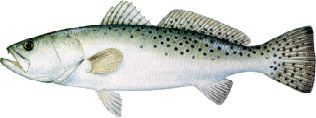
The Spotted Seatrout recreational season will re-open this Sunday, June 15, 2014 at 12:01 A.M.
The minimum size will not be less then 14 inches total length. And the recreational bag limit is not more than four (4) spotted seatrout per day by hook and line.
This fishery was closed this past winter after a significant cold stun event in February 2014.
Please note that just because this fishery has re-opened, it does not mean that it is free-run on this species.
Please practice good conservation techniques. Return all unwanted fish to the water carefully.
Until next time – Tightlines – Capt. Tony
Homework for Better Angling
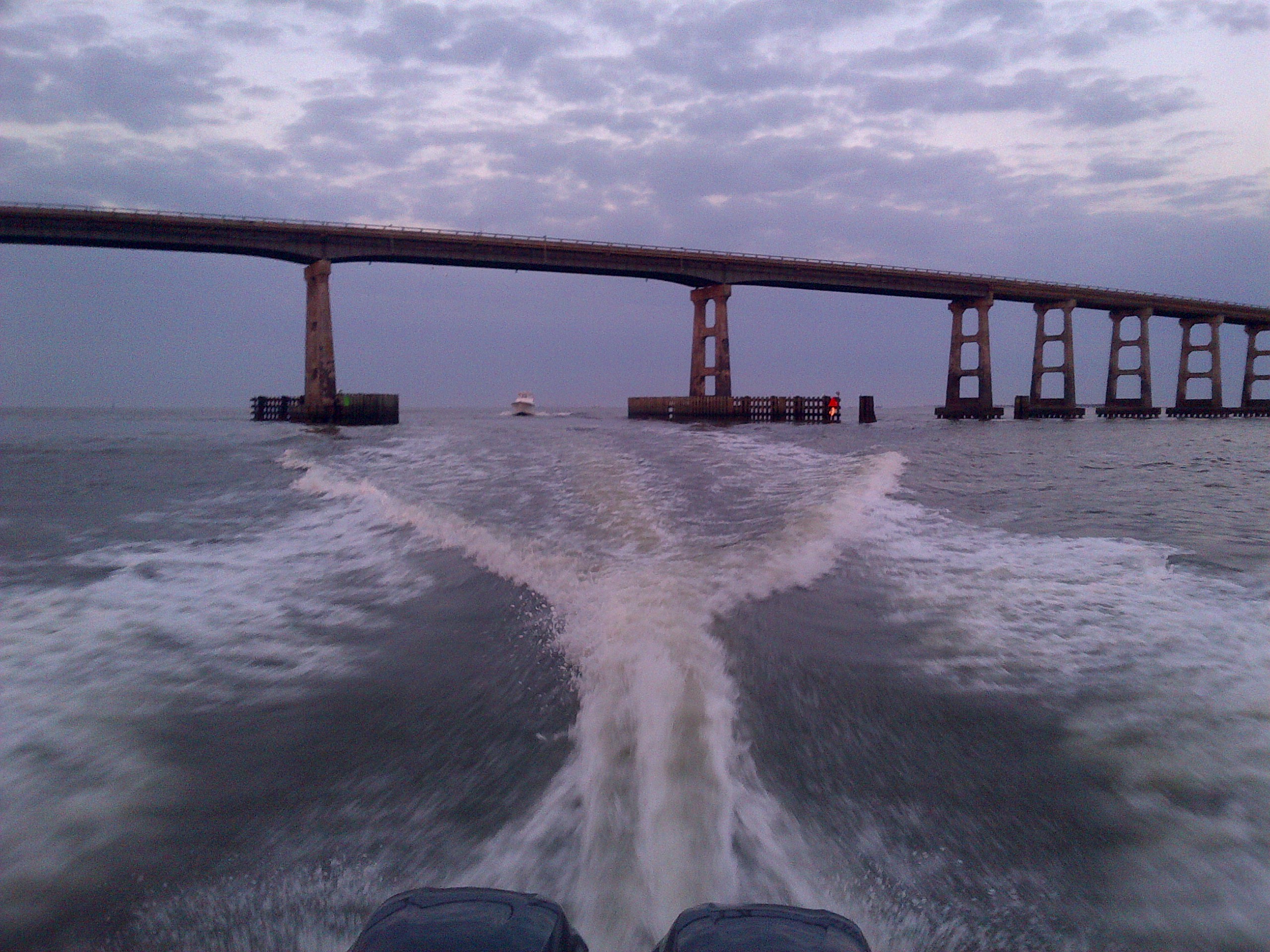
Wait a minute, “Captain Tony”, this is a fishing blog, not high school class. What are you doing talking about homework? Well, if you do a thorough job with your homework before heading out, this process will greatly improve your chances for angling success
My good friend, Capt. CA Richardson, once told me that you “catch more fish the night before”. The more you know about your prey and their preferences and weather and water conditions will be the differentiator between a successful fishing trip or just a nice boat ride.
What are some of the things that I check before heading out? First, I check if the target species is in season? What do the local fishing reports show? Is there news from the local piers, beaches, marinas or the various tackle shops? Where have the fish been seen and recently caught. What were the best baits being used. I now have a good idea that my target is at least in our area and is active.
Second, I look at weather conditions. I focus on the sun and cloud cover, air and water temperatures, tides, wave action and water clarity, winds (speed and direction), weather fronts (are they cold or warm, current locations – moving or stationary), barometer reading over the past several days and into my angling day, and finally what are the moon phases and the solunar status for the period.
The final piece to angling is having a little luck. But I always say, “You will change or make your own luck with good preparation”, or in the case of the purpose of this blog – “Do Your Homework for Better Angling”.
If you follow some of these simple tips, your success rate should improve. And hopefully over time, these will help you become a better angler.
Until next time,Tightlines. Capt. Tony
You Ready – I’m Ready?
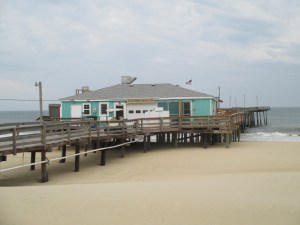 The fishing piers are open!!
On Friday, all of the northern Outer Banks fishing piers opened for business. Some of them had extensive damage from last winter’s storms but all have weathered them fine and are now ready to accept hardy anglers. This week would also be a great time to check out the renovated pier facilities after the long winter. I did and it was worth my time.
The weather has been beautiful over the past several days with variable winds with a little bit of cool air temperatures. It appears we will be having these fluctuating temperatures all week: warming during the day and cooling off nights. As normal – be prepared for an occasional wind and stormy periods.
Expect most of the Outer Banks piers to have modified hours for the first several weeks of April due to the unstable fronts, cold water and limited number of anglers. Once the season gets underway in mid-April or later, the piers will open longer hours with several being open 24 hours. Prices have changed since last year, too. As a general rule this early, it’s best to call ahead for current fees and schedules.
All of the Outer Banks piers have tackle shops and experienced help where you can gain valuable information on what’s biting, bait types that work best and any regulations that apply.
So what are you waiting on? Check out our piers. Whether you are a local or visitor, the Outer Banks piers are the best place to learn new techniques or meet new friends while enjoying one of nature’s best past times. Look for more information on each pier in future blogs posts.
See you on the pier – Until next time, Tightlines. Capt. Tony
Skin Cancer Risks Start Young
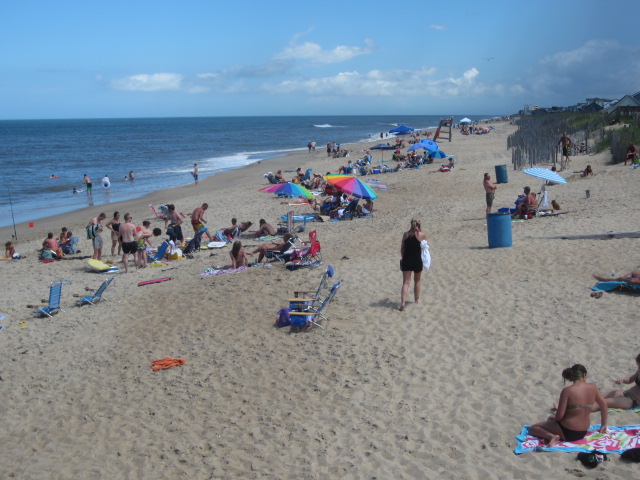
The summer season is in full throttle on the Outer Banks. Anglers are catching the standard summer fare – spot, croaker, sea mullet, blues, trout, Spanish, cobia, and some pompano. Whether you are in the surf, the various piers or many bridges, there is very little chance that you will be unsuccessful.
One catch you want to definitely avoid is skin damage for the sun. In past blogs, I steered you to an outstanding site that will give you everything you need to select the best sun screens.
One of the topics on this site is “skin cancer risks start young”. I know when my two boys were young we lathered them with sun screen every hour. Our requirement was that every snack or drink break, was a sun screen application. My hope was that this regimen helped them learn a valuable lesson.
So when you are outside whether fishing or just enjoying the beautiful Outer Banks recreation, remember to “lather on” the sun screen. My boys thanked me and so will yours.
Here is the link to the best sun screens on the market. Hopefully the one you use is near the top of the lists.
EWG Skin’s Deep – Http://www.breakingnews.ewg.org/2012sunscreen/
Until next time, Tightlines.
March is Like a Lamb
March usually comes in like a lion and goes out like a lamb but this year its been a lamb all year. The weather has been just outstanding with beautiful blue skies and mild breezes. We had some cooler weather lately but nothing like years past.
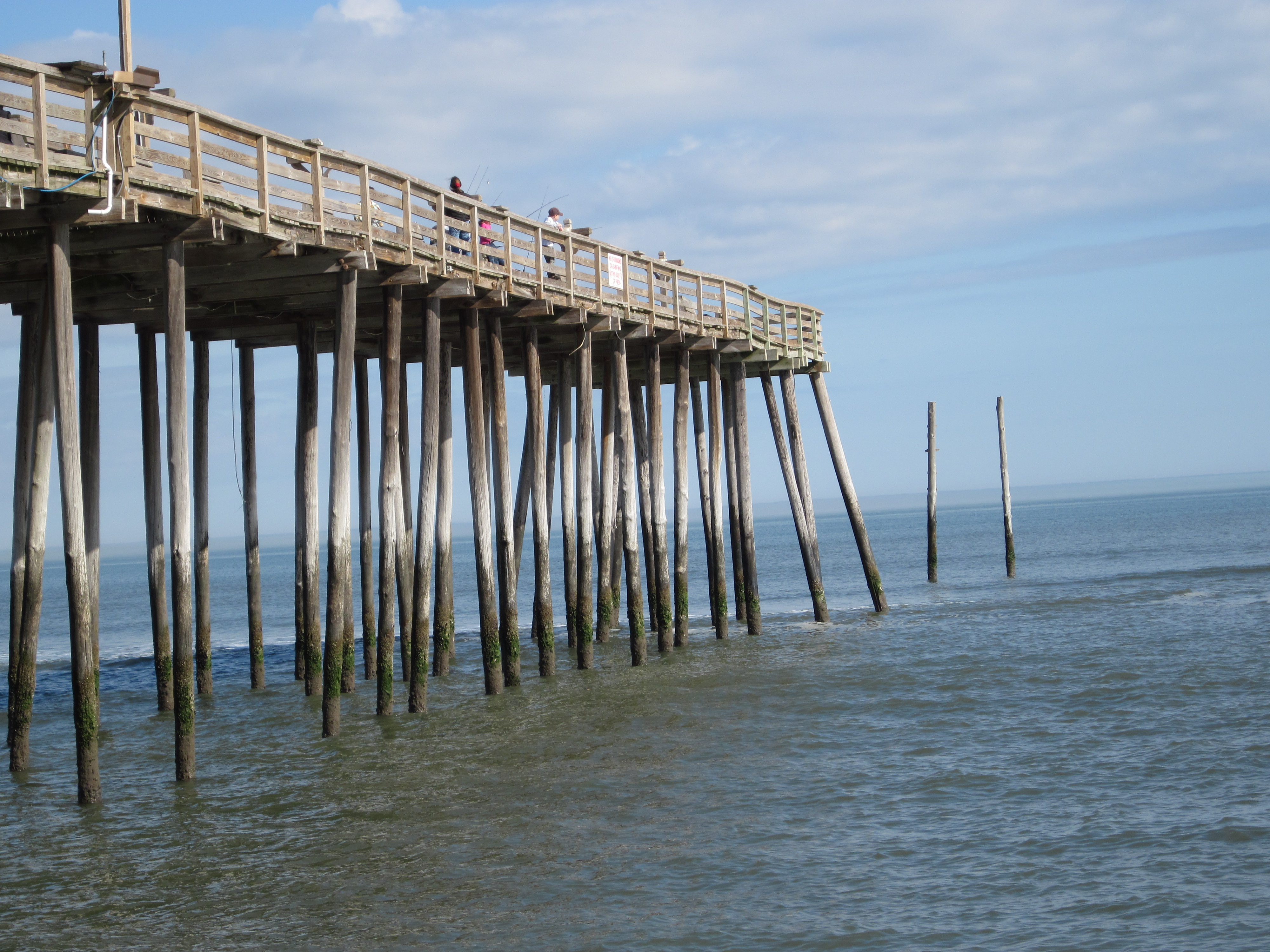
This week the weather is turning from cooler to warm with daytime temps into the lower 80’s. Water temps are still in the 50’s but as previously posted, warm water is close.
Traveled west of here earlier in the week and saw something foreign to me over the past several months. Anglers fishing for shad on the Daniels Bridge.
Shad are a type of herring but grow a little larger. Typically, you will find them in the eastern carolina tidal creeks in March. But we always get a run in the sounds. You can catch them on small spoons, flies and a variety of artificials. Shad are more active in the warmest part of the day so go late.
Piers are reporting dogfish, skates and some puffers. And the southern beaches are seeing some drum move into the area.
Tip of the week – Ready the gear because once the fish are here there is no time to deal with rusty equipment.
If you plan to fish on Hatteras Island this year, don’t forget to get your vehicle pass. The park service is beginning to enforce the rule now. $120 for an annual pass or $50 for the weekend. Tough choice. Getting mine Saturday.
Until next time – Tightlines
New Spotted Sea Trout Regs
More changes are coming to the Speckled (spotted) Sea Trout Fishery on the Outer Banks, effective Monday, February 27, 2012. As you recall we had a major kill off last year and the Division of Marine Fisheries has been working to help the stock recover. We are close but we still need to conserve.
According to the North Carolina Division of Marine Fisheries, recreational fisherman may still harvest four (4) speckled (spotted) sea-trout per person per day by hook and line. There is no change from the limit in the previous proclamation.
The minimum length is still fourteen (14) inches total length. But the most significant change states that DMF have eliminated the limit of fish over Fourteen (14) inches. Previous rules state that only two (2) fish over twenty-four (24) inches could be harvested. Now there is no limit to size over fourteen (14) inch size.
As a community, we have all worked together to help this fishery recover. But the work is not over. When fishing for spotted trout, only take what you can use today and return the rest to be caught again.
Only with aggressive conservation can we save this fishery for future generations.
Until next time, Tightlines
Waiting for the Fish to Arrive
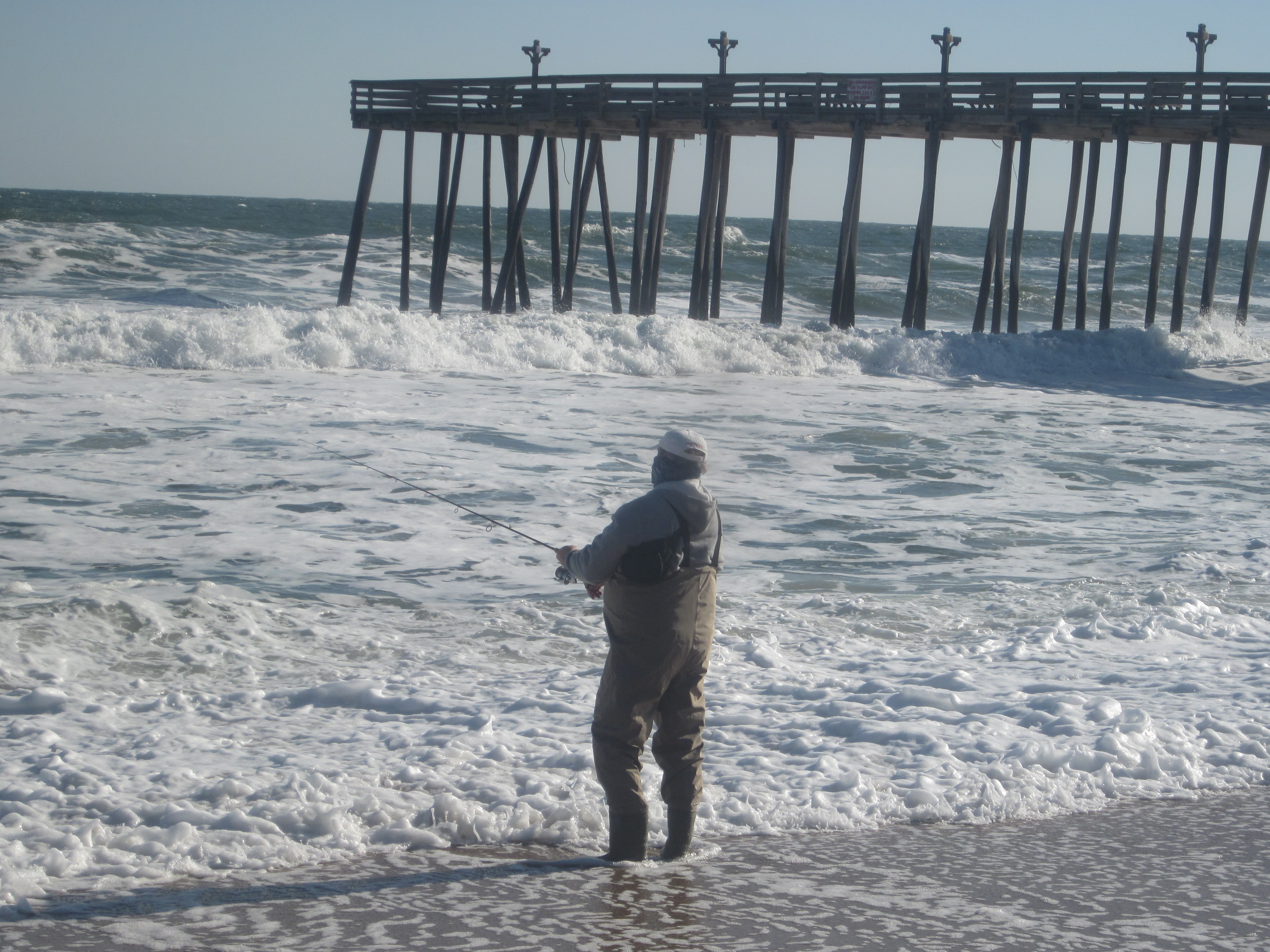
Fishing has been extremely slow over the past two weeks. I am just now hearing that some nice Rockfish are being caught both in the ocean and sounds. But anglers need to work hard due the stubborn water temperatures. Water has become too cold to fast in the sound but staying too warm in the ocean.
It also seems that the regular migration of big Rockfish and Blues has changed. On a typical fall/winter season, we see the decreasing water temps in the upper Atlantic and Chesapeake Bay drive the fish right to the near waters of Outer Banks for several weeks. Then after feeding heavily, they head off shore to winter in deeper water. Recently, the warm water temps have dropped up north but stayed too warm here. So once the fish arrive, they head straight out to deeper water and away from us.
The slow period has given me time to re-line several of my reels and purge my tackle boxes of used equipment that has seen better days.
One focus should definitely on winterizing your water crafts. Stabilizing fuel, fogging engines, emptying water tanks and hoses, removing all equipment and storing batteries in a protected environment.
A good cleaning of the hull, decks, and other surfaces plus applying a good coat of wax should be standard procedures. Plus installing your winter cover will save you many hours of agony in the spring.
Hopefully there will be better news in the coming days and weeks.
Until next time, Tightlines
The Perfect Spot If You Know What to Look For
There are many ways to locate a perfect surf fishing spot. The old saying is, “you should fish where the fish are”. But without being facetious, that is not always easy. You can always call a local tackle shop or pier. They can only give you what other people have called in or what “has or is” happening at their location.
My plans don’t always allow me to fish at any optimum time or place. So I go when I can. My favorite spot is the surf. There are so many opportunities there. But you must know where there is a possibility of fish. Blind casting is fun but not very productive.
My first observation when surf fishing is to study the wave action and the beach configuration. I look for a steep drop off at the water line and the rip current. A good indication of a steep spot off is a gravel /shell pile.
Typically fish will be found in the sloughs. A slough is a channel of deeper water between the beach and the sand bar. The sloughs during incoming tides create a “river” of water traveling parallel with the beach. At the weak point in the bar, the water rushes out to sea. This is the rip current.
You should try to fish in this “river” just north or south of this rip. 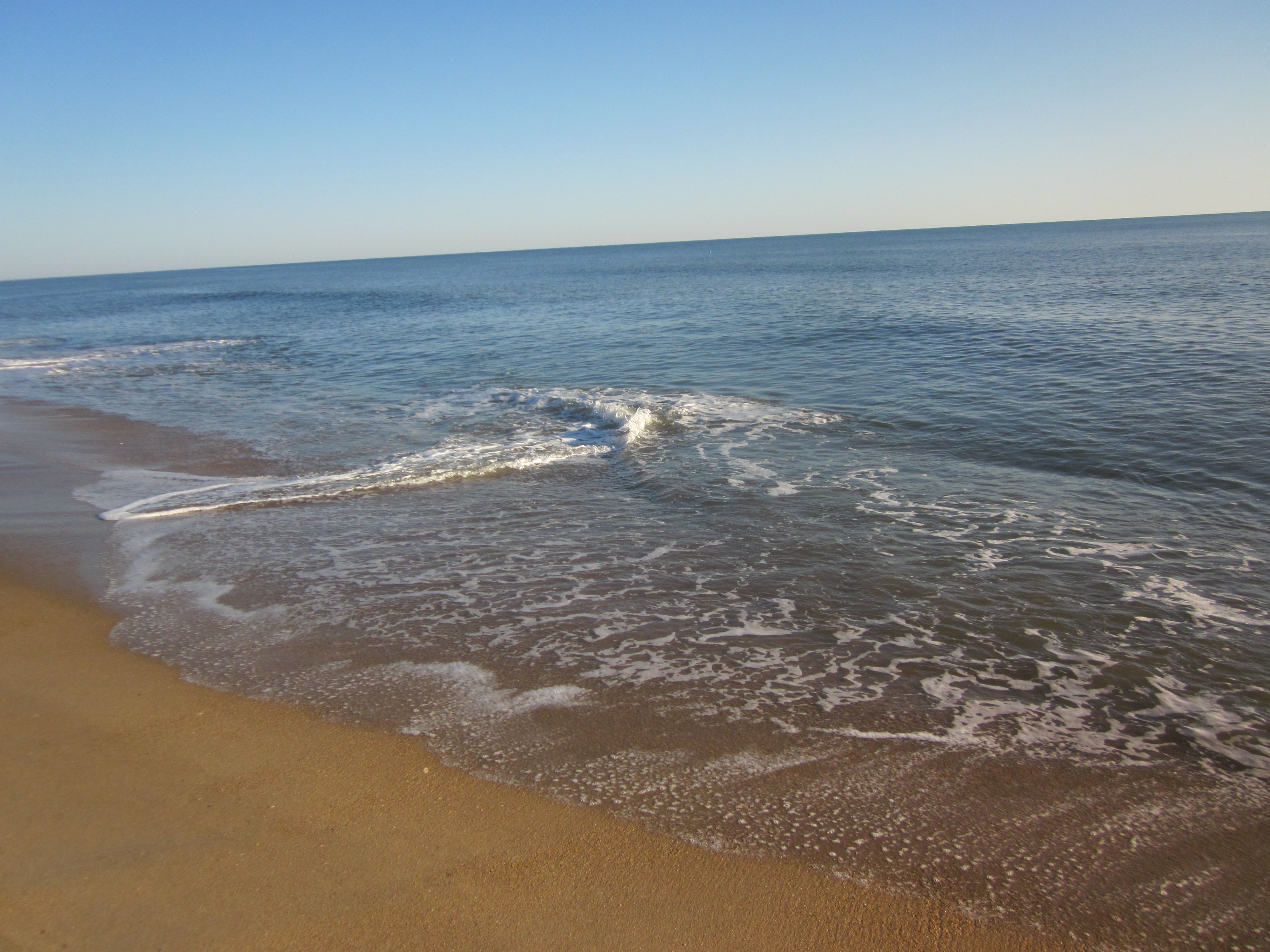 In this picture, you can see the beginning of a rip current being formed.
So next time you plan a trip on the surf, look for that tail tale sign. Now that’s where the fish are. Take it from me, this is where I have been most successful.
Until next time,
Tightlines
 NCsaltaire