Archive for September, 2012
Take a Break from Fishing
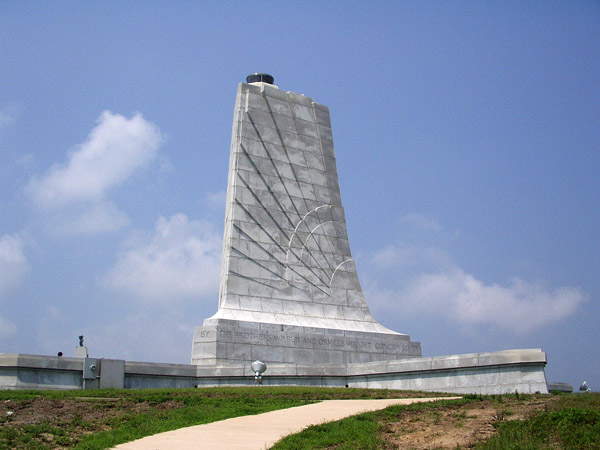 Today is National Public Lands Day. This day is dedicated to the hundreds of thousands of volunteers who help keep our public lands and parks in good condition. It is the largest single-day volunteer effort. The volunteers will contribute their time by helping the park staff with small maintenance activities such as planting trees or cleaning up recreation areas. Many small tasks equal a great effort.
What this day also means to us is that we can access many of our National parks for free. Yes, that’s right many of our National Parks are absolutely fee-free today.
So when you are tired of catching all of those fish or the family is at odds with you doing something just for you, take the family to one of our National Parks. Even though many of the duties have already been assigned or completed, any small gesture would be greatly appreciated by the staff. And it will give you and your family a chance to re-connect with our public lands.
So get out and enjoy it.
The Outer Banks have several parks here for you to enjoy. The one I like the most is the Wright Brothers National Memorial. So if you are in the area, stop by and get your picture taken in front of the memorial or just cruise the grounds. History will wrap you like a blanket.
Hope to see you there after the first bite.
Until next time, Tightlines – Capt. Tony
Navigation – Old School Rules

We seem to be an extremely mobile society. We travel by air, land and sea with regular frequency. There is one common theme for all of these modes of travel. That commonality is aids of travel or in nautical terms, “Aids to Navigation.”
Amazingly, the “Aids to Navigation” Statute we follow now originated in our first US Congress and was signed into law on July 31, 1789. This act was referred to at the time as “Establishment and Support of Lighthouses, Beacons, and Buoys.”
Over 200 years later, we still use this original system. Although, members of our first Congress would probably not be able to recognize how the older version turned into the current rules.
Basically, “Aids to Navigation” can provide a boater with the same type of information drivers get from street signs, stop signals, road barriers, detours and traffic lights. These aids may be anything from lighthouses, to minor lights, day beacons, range lights, and sound signals, to lighted or unlighted buoys.
Each has a purpose and helps in determining location, getting from one place to another or staying out of danger. The goal of the U.S. Aids to navigation System is to promote safe navigation on the waterway.
I have found that most vessel operators would have a hard time navigating through the various signs, buoys and light schemes.
One way to become proficient with these aids would be to take a safety boating class through the Coast Guard Auxiliary or similar agency familiar with these rules.
Most states and local municipalities require some type of safe boating class. These classes can be completed easily over several weeks. And most classes are held in the evenings and weekends.
This is training is easy to complete and will make you a better boater. And might just help you avoid a “bad day on the water”.
Stay tuned, I will provide much more on Aids to Navigation in future blogs.
Until next time, Tightlines
Fishing in “Fishing Paradise”
The first mate and I traveled to the west coast of Florida in early September to fish for Gator trout and giant Redfish. Our guide was Capt. CA Richardson from Flats Class TV and Charters. The trip took us to Tampa Bay and Pinellas National Wildlife Refuge.
The weather was extremely hot with equal high humidity. The skies were clear with a constant breeze out of the southwest. We knew the conditions were going to be difficult but we were up for the challenge.
Our charter originated out of O’Neill’s Marina in St Petersburg, Florida. We have fished with Capt. CA before so we knew the drill. We would depart the dock at 0700 and fish both tides. Our trip would lead well into the afternoon. Our vessel was a popular Hells Bay Boats Works “Neptune”. We were ready.
The day started slow with us picking up an occasional speckled trout using both spoons and artificial lures. Our gear was top of the line Daiwa reels and Falcon light Gulf Spin rods. The reels were loaded with premium 15 pound braid. This set up has produced before, so we had confidence of a repeat success.
By 1000 we had caught a number of beautiful specs but not the “gator” size or giant reds that we hunted. We decided to try another area on the west side on the harbor.
During our travels to the next site, we spotted a school of giant reds. The pod was well over a dozen yards square. This school was the one we met up with last year estimated at several hundred fish. The forward wave push of this school was over six inches. Capt. CA maneuvered the vessel about 75 yards ahead of the school, turned the bow straight into them. And we waited.
As the school approached us, they suddenly disappeared. Gone – they nowhere to be found. Spooked!! We would search for them for over an hour. Without locating them again, we then proceeded to return to the Gator Trout fishery. Over the next several hours, we had a great day catching and releasing close to two dozen specs.
We returned to the dock at 1500, exhausted but satisfied that we had another great day on the water with our good friend Capt. CA.
For a memorable fishing experience, you need to plan a trip to southwest Florida. When in Florida, Capt CA is the guy.
One slogan that holds true for Florida – it is definitely a“fishing paradise”.
Until next time, Tightlines.
.
OBX Striped Bass Recreational Season 2012.
The 2012 Albemarle Sound Managements Area Striped Bass Recreational season has been set for 2012.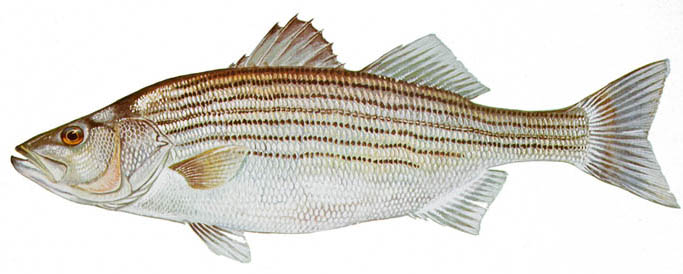
The season opens on October 1, 2012 at 12:01AM and will close at 1800 hours on Tuesday, April 30, 2013, unless closed earlier due to another directive from DMF.
This year we will continue to harvest the same number of fish as last year – three (3) fish per day. And the minimum size will stay the same at eighteen inches.
Great news is that we can also fish seven (7) days per week.
This fishery is still recovering so each angler should continue to practice conservation. Only take the fish you plan to use. And return the others back in the water carefully.
I will continue to preach, “only you can make our fishery better, not only for us but for future generations.” We must do our part.
Enjoy this fishery but fish it responsibly.
Until next time, Tightlines
WOW – Labor Day is here. Where did the summer go?
 As we move from the summer season to September, this marks the end of the summer season, but by no means does it mean the end of the fishing on the Outer Banks. The ocean and sound water temperatures are still in the 70’s and weather is still very mild.
With the exception of an occasional evening thunderstorm or rare hurricane, there is little that can postpone a great trip out on the water.
My recommendation for the next several weeks is surf or pier, although, you will also find the sound fishing to be outstanding. Sound fishing will be a topic for another blog.
Our warm water keeps those bottom fish right near the shore; basically, at your feet in the wash. Pompano, trout, croaker, flounder and spot should be easy to catch. We still have an occasional Spanish mackerel but they will be gone soon.
My favorites are both speckled sea trout and puppy drum. They both can be caught artificial, live or cut bait. Typical bottom fish will take blood worms. So you should always take a variety of baits.
I also look for the mole or sand fleas. These little crabs can be found at the water’s edge, burrowing in just after the wash recedes. These are great for pompano.
Light tackle including that 5-1/2 rod with #8 lb. test line really gives you the best action. I use a #4 circle hook on both a bottom rig and “Carolina rig”. Sinkers can be pyramid or bank types. On the Carolina Rig, I use a sliding egg sinker. Size depends on current and wave action. Smaller is always better than larger. This type of rig allows the bait to remain in a one area but to float freely at different depths.
Now the best bet for the next several weeks is to “just go”. And you will not be disappointed.
Until next time, Tightlines.
 NCsaltaire